
Freezing time is often treated as a number on a machine schedule. In a real IQF line, it is a moving result. Airflow changes how much cold air reaches the food. Belt speed changes residence time. Product thickness changes the distance heat must travel before the center reaches its target condition. Feed temperature, loading pattern, evaporating temperature, moisture, and the final core temperature matter just as much.
That is why a request for a single answer to “how long does IQF freezing take” can create trouble during equipment selection. A short run may work for thin vegetables but leave a thicker fish portion warm in the center. Slowing the belt may protect the core yet reduce output or alter the surface. The useful approach is to treat IQF freezing time as a process window that must be verified with the actual food and line layout.
What Freezing Time Actually Measures
Surface Set Is Not Core Freezing
A product can look frozen while its center is still moving toward the required condition. Small diced food, berries, shrimp, fillets, dumplings, and prepared meals do not release heat in the same way. Shape, density, water content, packaging state, and initial temperature all affect the food freezing rate. A belt discharge check based only on surface appearance is too weak for a production decision.
For a proper trial, record the condition at entry, the time spent inside each relevant zone, and the core temperature at discharge. Keep product size and loading consistent during the comparison. If thickness changes from one batch to the next, the same belt setting cannot be expected to deliver the same result. The target is a repeatable core condition, not the shortest displayed residence time.
How Airflow Changes the Freezing Result
Air Distribution Matters More Than a Cold Setpoint
Cold air only helps when it reaches the product surface with enough uniformity. A crowded belt, uneven feed, blocked passage, or weak circulation zone can create a different food freezing rate from one side of the tunnel to the other. The product near an exposed edge may set quickly while pieces in a deeper layer remain warm. That variation becomes a quality and yield problem even when the room reading looks acceptable.
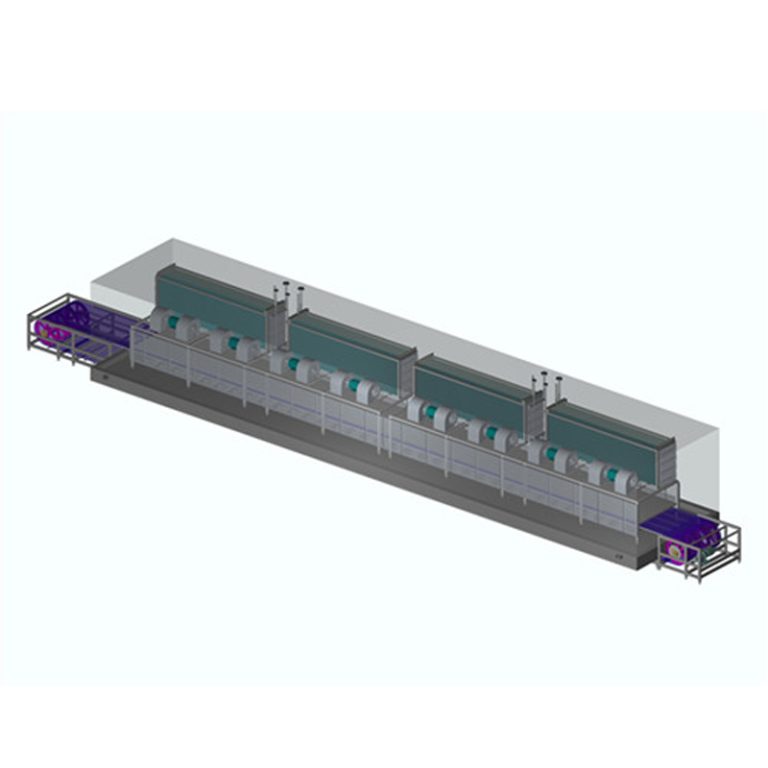
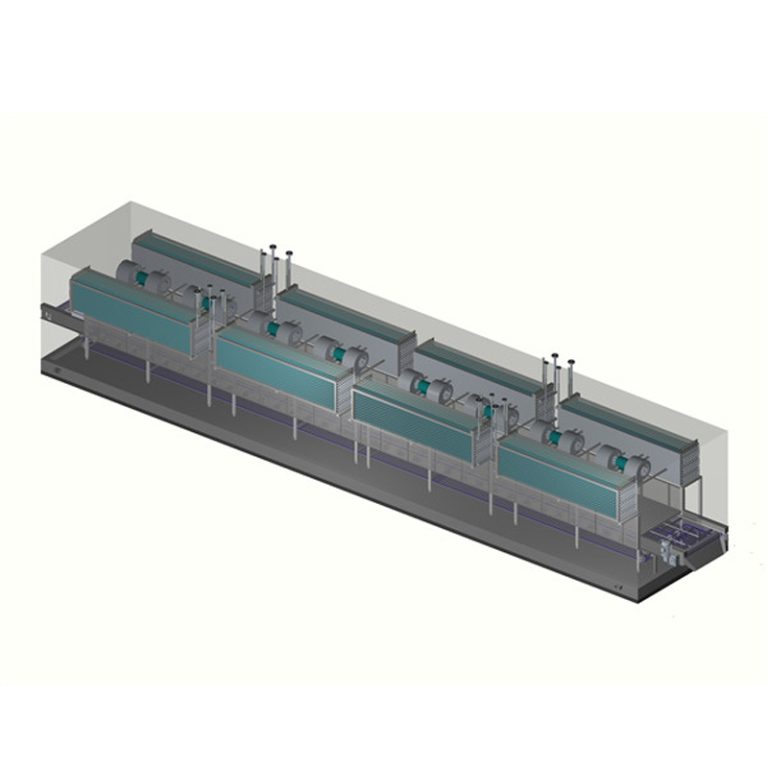
The airflow in tunnel freezer design should therefore be reviewed together with belt width, loading depth, air-duct layout, fan control, and product shape. YONGXING describes its impingement equipment with upper-and-lower air blowing for even cold air circulation. It also connects that arrangement with fast freezing and low dehydration loss. Those are design points to verify against the actual product rather than general claims about air velocity.
Fluidization Suits Certain Small Pieces
For suitable particulate foods, fluidized bed freezing changes how pieces meet the air. High-velocity cold streams suspend individual particles above a mesh belt, increasing exposed surface and reducing contact between pieces. YONGXING lists fruit and vegetable pieces, seafood, ready-to-eat foods, cheese cubes, breadcrumbs, and dough pieces among the relevant applications for its مجمد نفق ذو طبقة سائلة. This can be valuable when the line needs both separation and even heat exchange.
Fluidization is not a universal answer. A soft, large, irregular, or easily damaged product may need controlled support rather than suspension. The supplier should see representative samples and confirm whether the product remains stable under the proposed airflow. The test should include the normal feed range, not only a carefully prepared sample with unusually low moisture or light loading.
Why Belt Speed and Thickness Must Be Judged Together
Belt Speed Sets Residence Time
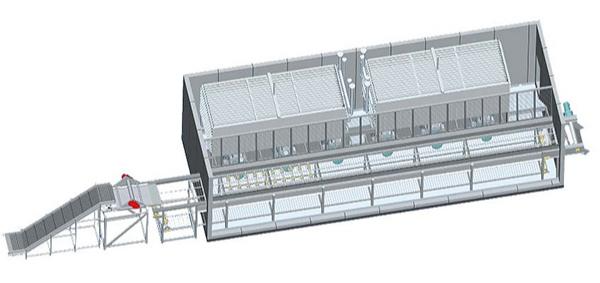
The relationship between freezer belt speed and residence time is straightforward, but the buying decision is not. A faster belt increases line output only when the product still reaches its required core condition. A slower belt gives more time in the cold zone, yet it may create a bottleneck before packaging and change the product’s surface exposure. Variable-frequency control is useful because the operating point can be adjusted as product type and production demand change.
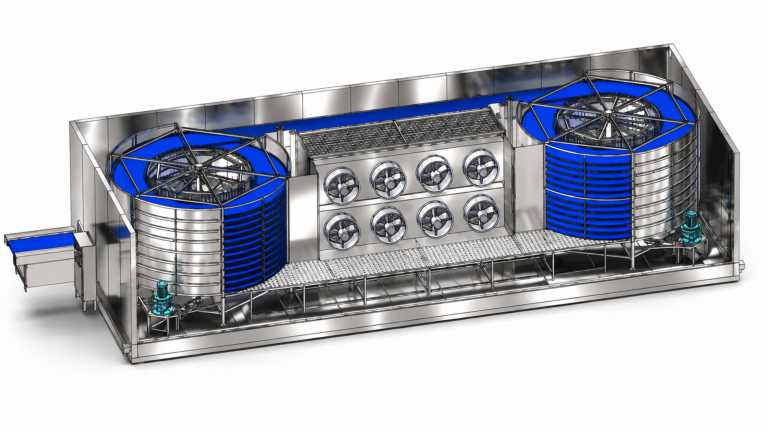
YONGXING’s IQF equipment describes variable-frequency speed regulation for different frozen products, while the double spiral freezer information notes that freezing time can be adjusted through variable frequency speed control. In a quotation, ask whether the control range, sensor feedback, and changeover method match the factory’s actual products. A control knob alone does not prove that the line can hold a stable result.
Thickness Changes the Heat Path
Product thickness has an outsized effect on freezing time because heat must travel from the center to the surface before the core settles. Two products with the same weight can behave differently when one is thin and wide while the other is thick and compact. A fillet, boxed meal, dumpling, diced meat piece, and berry, therefore, need separate validation points. Product thickness should be included in the equipment brief, sample plan, and acceptance test.
The relationship is not linear in every practical situation. Moisture, density, shape, surface contact, and air exposure all matter. For that reason, industrial freezing parameters should be recorded as a set: initial product temperature, dimensions, loading, belt speed, airflow condition, evaporating temperature, and target core temperature. Changing one value without logging the others makes the test difficult to interpret.
A Better Way to Set Freezing Parameters
Build a Product-Based Trial Matrix
A useful trial starts with the products most likely to challenge the line. Test the thinnest and thickest normal pieces, the lightest and heaviest expected loading, and the warmest realistic feed condition. For each run, record belt speed, air setting, product layer, entry temperature, discharge core temperature, appearance, and any sticking or dehydration. The objective is to find a workable operating band instead of one ideal result that only appears under laboratory conditions.
ال مجمد حزام شبكي متداخل is one example of equipment where belt construction and line dimensions belong in that discussion. YONGXING lists a SUS304 chain mesh belt, upper-and-lower air blowing, variable-frequency speed regulation, and belt width and length that can be set around output demand and site conditions. Those details affect how a project team evaluates loading, access, cleaning, and future product changes.
Check the Whole Line Around the Freezer
The freezer does not work in isolation. Product transfer height can damage soft food or create an uneven pile. A delayed infeed can raise product temperature. A packaging line that cannot accept the discharge rate may force accumulation after freezing. Defrost and cleaning cycles can also change the available production window. Review the freezer with the upstream forming, cooking, or washing steps and the downstream packing route through an التجميد السريع الفردي مجموعة المعدات, rather than selecting capacity from a nameplate alone.
What Buyers Should Put in the Specification
A practical specification should state the product family, size and thickness range, entry condition, target core temperature, expected hourly loading, acceptable surface appearance, packaging point, available footprint, sanitation routine, utilities, and seasonal changes. It should also state which values must be confirmed during testing. Avoid wording that treats a fixed freezing time or one tunnel temperature as a guaranteed result for every product.
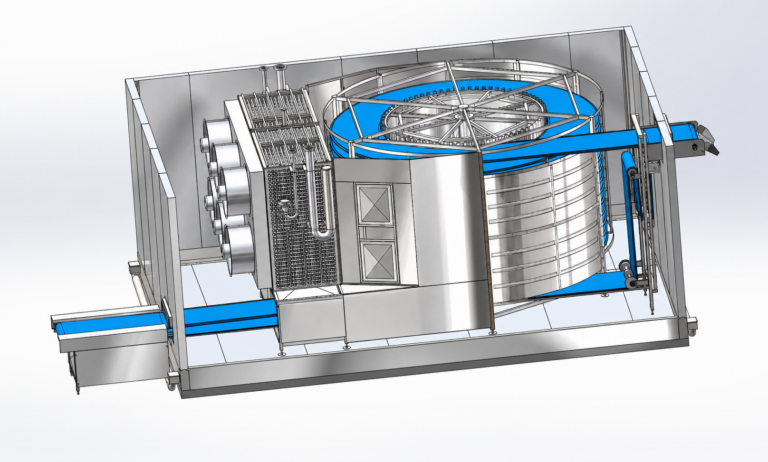
YONGXING manufactures and supports IQF, fluidized tunnel, spiral, impingement tunnel, and food production line equipment for aquatic products, fruits and vegetables, meat, wheaten foods, and prepared foods. The right equipment choice depends on the product’s shape, sensitivity, load pattern, and required process connection. A project discussion with يونغشينغ is most useful when it includes samples or detailed product data, not only a target tonnage.
The final decision should come from a documented trial and an acceptance method that both sides can read the same way. When airflow, freezer belt speed, product thickness, feed temperature, loading, and core temperature are logged together, IQF freezing time becomes manageable. It stops being a guess and becomes a production parameter with a clear boundary. If you would like to learn more, please اقرأ هذه المقالة.
التعليمات
Q1: Can a faster belt always increase IQF production capacity?
A1: No. A faster belt shortens residence time. Capacity can rise only when the product still reaches its required core condition and quality after the change. The result must be checked with the actual loading and product thickness.
Q2: How should airflow be tested during a freezer trial?
A2: Keep the product, loading depth, and entry condition stable while changing the airflow condition. Compare core temperature, surface appearance, moisture loss, and product distribution across the belt. A room setpoint alone is not enough.
Q3: What information should be sent to an IQF freezer supplier?
A3: Provide product type, dimensions, thickness range, feed temperature, moisture or coating condition, hourly load, target core temperature, packaging connection, site limits, sanitation requirements, and the expected product mix. These details give the supplier a basis for selecting and testing the equipment.