
An IQF freezer can leave a food plant with a good freezing result and a poor hygiene result if cleaning access is treated as an afterthought. Product residue can hide around belt returns, supports, air openings, drains, and transfer points. A practical IQF freezer cleaning checklist connects food equipment sanitation with the way the machine is built and the way each shift operates.
The sequence below is a working framework for a plant SSOP. It does not replace the site’s hazard analysis, lockout procedure, chemical approval, or validation program. Chemical concentration, water temperature, contact time, and rinse limits must follow the approved food-plant SSOP, the chemical label, and supplier confirmation. Unknown values should be written into the pre-start review as items to verify, never filled in by guesswork.
Set 티he Cleaning Boundary Before Shutdown
Start with the product and equipment boundary. Identify the last batch and note whether the freezer handled raw seafood, meat, washed vegetables, cooked food, dough, coating, glaze, or loose pieces. Different residues call for different removal methods. Allergen or ready-to-eat lines may need a separate release decision before the next product enters.
Stop Production And Make The Area Safe
Stop feed, discharge, and connected conveyors in the plant’s sequence. Remove remaining product from the belt and floor. Isolate electrical, mechanical, pneumatic, and refrigeration hazards under the site’s lockout and permit procedure. Fans, belts, scrapers, pumps, and automatic defrost functions must not start while people work inside or near the chamber. Confirm access rules, lighting, ventilation, and sign-off before opening panels, then identify parts that must remain protected.
Map Contact Parts And Access Points
용싱 equipment uses different conveying arrangements for different products. The impingement plate belt model uses a SUS304 stainless steel plate belt with upper-and-lower air blowing; the impingement mesh belt model uses a SUS304 chain mesh belt. Those surfaces are relevant to hygienic freezer design, but the full cleanable boundary still includes belt edges, frames, guides, supports, joints, infeed and discharge transitions, air ducts, evaporator areas, and drains.
Run The IQF Freezer Cleaning Sequence
1. Disassemble Removable Parts
Remove belt sections, trays, guards, scrapers, guides, collection pans, and other parts listed in the equipment-specific SSOP. Place small parts on a clean rack, and mark orientation when reassembly could affect belt tracking or product contact. Do not remove protected electrical covers or refrigeration components unless the approved procedure assigns that work to qualified personnel.
2. Dry Remove Residue, Then Foam Clean
Pick up solids before spraying. Brush or scrape residue from belt returns, corners, welds, sprockets, guards, and floor channels with approved tools. Apply the approved foam detergent at the concentration and temperature specified by the plant program and chemical supplier. Check protein film, starch, sauce, oil, crumbs, and fine food particles. Foam holds chemistry against a surface; it is not proof that the surface is clean.
3. Rinse, Sanitize, And Dry
Rinse until detergent and loosened soil are removed, while keeping spray away from electrical parts, bearings, sensors, and any other restricted area. Apply the approved sanitizer exactly as specified by the plant SSOP and chemical label. Do not invent a concentration or contact time. After the required contact period, drain and dry the machine with the approved method. Standing water under a belt, in a frame channel, or near a transfer is a release issue, not a cosmetic detail.
4. Reassemble Without Recontamination
Inspect parts before they return to the freezer. Replace damaged belt links, cracked scrapers, worn seals, or loose fasteners through maintenance. Refit parts in the correct direction, confirm belt tracking, and remove tools, tags, loose bristles, and packaging. A clean component can be recontaminated by a dirty rack, glove, hose, or floor, so the reassembly area needs the same discipline as the machine.
Adjust The Checklist To The Freezer Type
Spiral Freezer Cleaning Risks
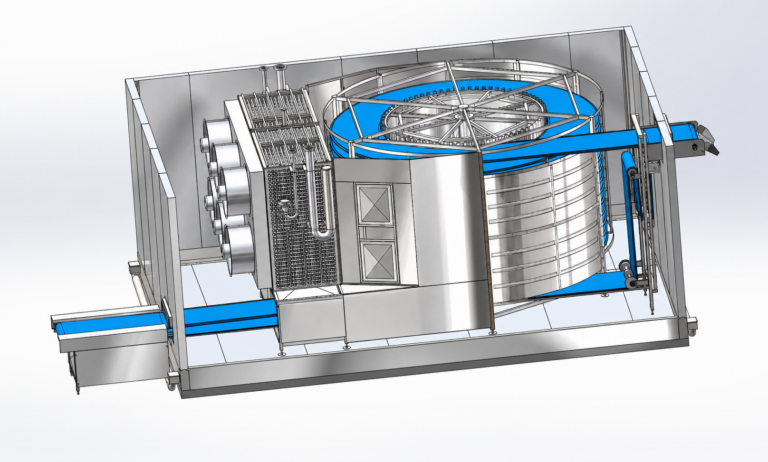
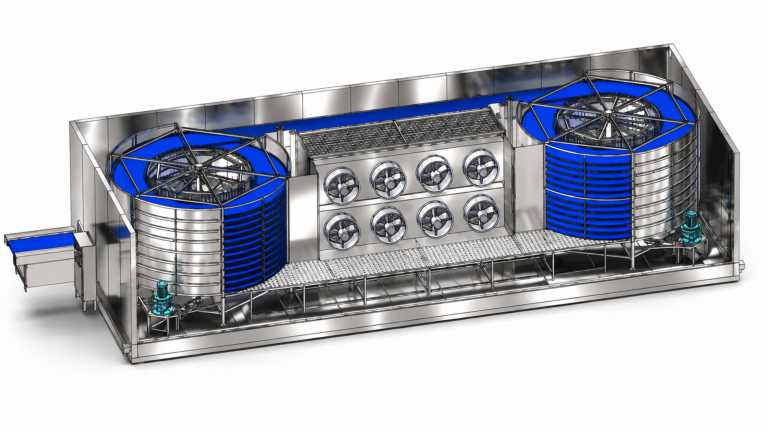
Spiral systems add vertical tiers, inner and outer belt turns, supports, and areas that are harder to see from the door. Spiral freezer cleaning should trace the complete belt path, underside surfaces, tower supports, discharge transition, and drainage below the structure. YONGXING describes its double spiral freezer as modular and designed for easier maintenance. During procurement, ask which modules can be opened, removed, inspected, and dried without hidden residue pockets.
Tunnel And Impingement Risks
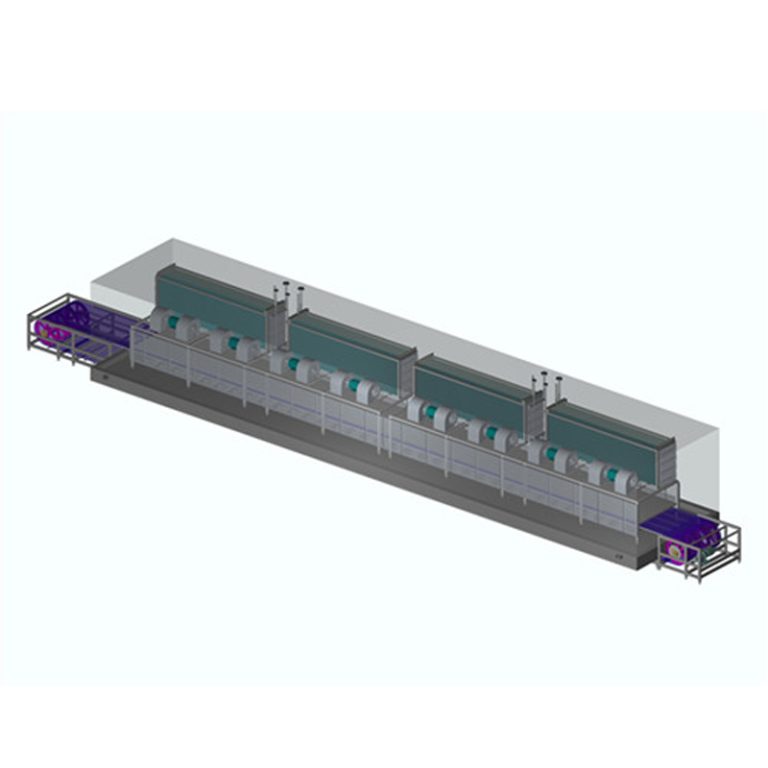
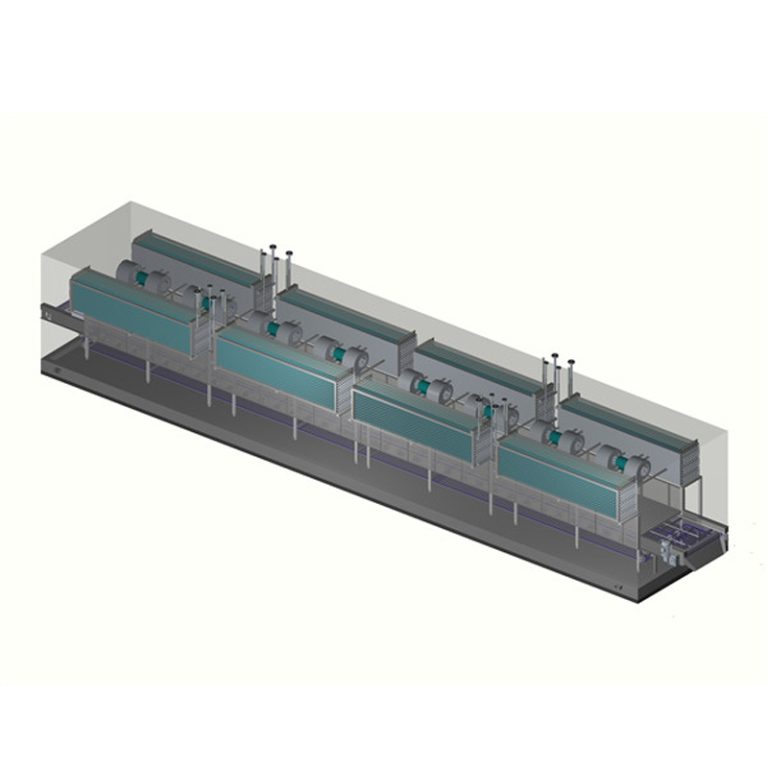
A horizontal tunnel has a long air path, so cleaning checks should include the infeed, product bed, belt return, fan and duct areas, evaporator surfaces, and drain points. The impingement models use air from above and below, making the lower air path and belt underside just as important as the visible top surface. Some impingement models use a combined water-flushing and hot-ammonia defrosting mode; the specific method, utilities, safety controls, and post-defrost sanitation steps must be confirmed for the purchased model.
Fluidized Bed Risks
A fluidized bed tunnel uses high-velocity cold air to suspend suitable individual pieces. Loose peas, diced vegetables, seafood pieces, and crumbs can collect in mesh openings, vibration areas, screens, and under the first separation zone. The YONGXING fluidized-bed material identifies removable conveyor sections and shielded electrical components. Removable sections support inspection and cleaning, while shielded components still require a defined spray boundary and a dry-condition check before energizing the line.
Verify Food Equipment Sanitation Before Release
Use Visual, Chemical, And Microbial Checks As Assigned
A visual inspection should cover the cleanable boundary under suitable lighting, including underside areas and hard-to-see corners. The plant may also use approved residue checks, ATP testing, allergen swabs, or microbiological verification. Each method answers a different question. A visual pass does not replace a required test, and a test result does not excuse visible soil.
Check The Dry And Mechanical State
Before release, confirm that the chamber and removable parts are dry, drains are clear, guards are fitted, and no cleaning tool remains inside. Check belt tracking, scrapers, sensors, fan guards, access doors, and safety devices under the pre-start procedure. Run an empty inspection or controlled test when required, then verify the first product batch separately. Sanitation release and production release are not the same sign-off.
Record What Happened
The record should identify the date, shift, equipment, product, operators, start and finish time, chemicals, batch reference, verification method, deviations, corrective action, and release decision. Record unusual residue, water pooling, difficult access, damaged parts, and areas needing extra work. If a belt section repeatedly takes longer to clean, consider a design change, upstream correction, or maintenance repair rather than another reminder to scrub harder.
Make Sanitation Part Of The Purchase Decision
Food processing hygiene should be discussed before the freezer is ordered. Ask for the cleanable-zone drawing, removable-part list, drainage arrangement, access to evaporators and fans, electrical protection boundary, belt material, and recommended cleaning method. Also ask how the machine connects to washing, dewatering, cooking, pre-cooling, packaging, and floor drainage. A line that is easy to clean in isolation may still create a sanitation trap at an awkward transfer.
YONGXING develops, manufactures, sells, and installs IQF equipment, fluidized and impingement tunnel freezers, spiral freezers, food processing machines, and complete production lines. Its product range covers aquatic products, fruit and vegetables, meat, wheaten foods, and prepared foods. For a new or replacement line, YONGXING freezing equipment can be compared by product residue, cleaning access, belt format, air path, utility boundary, and service arrangements rather than by freezer name alone.
A buyer assessing an 충격판 벨트 냉동고 can ask how its flat SUS304 belt and upper-and-lower air arrangement fit the washing routine. A small-piece project can review access around a 유동층 터널 냉동기. Where floor space and residence time lead to a spiral choice, discuss the complete tower path and modular access around a 이중 나선형 냉동고. For model-specific sanitation or layout questions, request a sanitation project review using the actual product and SSOP boundary.
The strongest checklist is specific enough to be used on a night shift and flexible enough to reflect the machine, product, and hazard analysis. Stop safely, remove soil in the right order, protect restricted components, sanitize to the approved program, dry completely, inspect the hidden paths, and keep records that can drive a real corrective action. That is what turns IQF freezer cleaning from a routine tick box into repeatable food equipment sanitation. If you would like to learn more, please 이 기사를 읽어보세요.
자주 묻는 질문
Q1: Can the same sanitation checklist be used for a spiral and a tunnel freezer?
A1: The core sequence can be shared, but the inspection points cannot. Spiral freezer cleaning needs tier, turn, support, and drainage checks, while a tunnel checklist must follow the long air path, belt return, ducts, evaporator area, and drains.
Q2: What chemical concentration should be used for IQF freezer cleaning?
A2: Use the concentration, temperature, and contact time approved in the food plant’s SSOP and chemical label, with supplier confirmation where required. No universal value should be copied across products, soils, materials, or sanitation programs.
Q3: What proves that a freezer is ready to run again?
A3: The assigned release checks should show no visible soil, acceptable test results where required, dry and clear equipment, correct reassembly, and completed records. The responsible food-safety or production role must make the final release decision.