
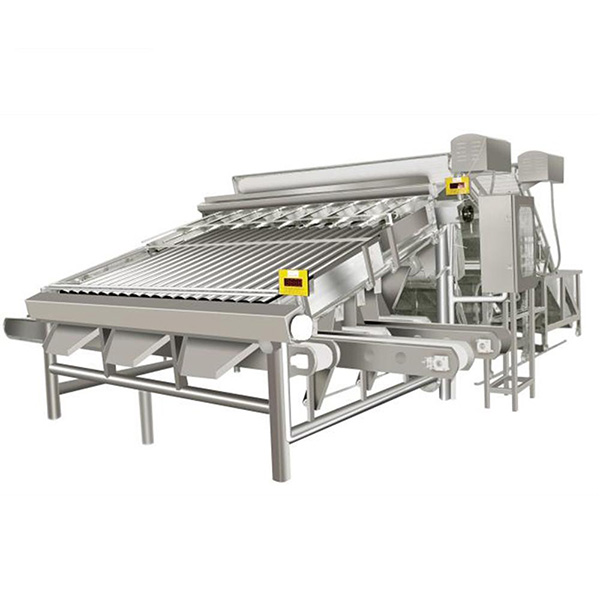
Out in factories or fields, grading machines help sort items just right – no guesswork needed. Used on farms to separate apples from carrots, or in workshops grouping parts by size, they bring steady results without extra effort. Machines like these sharpen accuracy when decisions rest on weight, color, or shape rules already set. People managing output, moving goods, or watching quality see a clear path by knowing how these tools work behind the scenes.
Shifting through piles, sorting tools handle different shapes and sizes based on how they’re built. When farming produce, grader machines split crops – say, spuds from onions, apples beside oranges. Instead of speed, they lean on physical forces: spinning wheels, pulleys, rattling surfaces that sort by thickness or heaviness.
Grading machines pop up in factories sorting stuff like metal, plastic, or electronics. Sometimes they come equipped with sensors, cameras, or laser tools – precision matters here. In places like kitchens, optical sorters show up more often. There they track flaws, shades of color, even how ripe something seems through smart image tricks. Some graders sort by weight because they rely on load cells set to specific values. These models operate within fixed parameters when measuring mass.
From farm to market, grading machines handle tasks in various sectors. Agriculture benefits when machines take over the time-consuming job of separating produce by measure and condition. Uniform packaging depends heavily on such precision. Meeting what buyers expect worldwide rests on these consistent evaluations. Take an apple sorter, for example – it separates produce by how fresh or processed it might become. Decisions happen fast, guided by marks, overall shape, and stage of decay.
Fisheries rely on grading machines to separate fish by length – meeting what buyers want or rules demand. Not just seafood, meat plants also use these tools to check how much meat is on a carcass and where fat settles. When it comes to digging deep, mining often sorts ore fragments by dimension using similar tools.
Production lines rely on scoring methods to monitor how well products form – especially in making electronics, car pieces, or everyday items. Speed matters here; automated scanners quickly sort out parts that fit tight requirements. Only those matching precise benchmarks get moved forward into distribution.
Today’s grading machines rely on modern tech to work faster and deliver sharper results. Built-in sensors like cameras, spectrometers, lasers, and X-rays team up with smart software to study features – size, hue, form, mass, even hidden flaws. These systems process data quickly using structured logic behind the scenes.
Usually, a grading machine pulls material in slowly through its intake part. Once inside, each piece gets sorted – either by touch or via electric signals – into separate groups. After sorting happens, moving parts steer each item toward correct paths. These guides might be mechanical shutters or blasts of air nudging pieces one way or another. A single main processor handles everything, pulling data from sensors while making choices on the spot as conditions change.
These days, plenty of systems use machine learning tools that grow smarter over time, guided by past grade data. Because items often change in shape or feature, such setups handle shifts well when conditions shift fast.
Using grading machines brings several advantages
Out in the field, grading machines now mix with smart tools such as artificial intelligence, internet-connected devices, and automated arms. Change moves fast here, driven by today’s tech shifts.
Now vision systems use artificial intelligence to spot tiny flaws people or old tools miss. Connected grinders through IoT let teams watch operations from a distance – warning signs appear before breakdowns happen. Data flows in from linked machines, showing how each unit runs over time.
Now picture robotic arms working alongside grading lines – they carefully manage fragile goods such as berries or tomatoes, ensuring no bruises or harm occur. Look too at modular setups becoming common; these adapt easily when production shifts or demand evolves.
Nowhere is the push clearer than in how factories design for lower power use and choose earth-friendly supplies – companies quietly reshape their habits to leave smaller traces on nature.
Even though they help, using grading machines isn’t always straightforward –
Picking a grading tool isn’t about one thing alone. Factors stack up differently for each situation.
Start by teaming up with seasoned vendors who grasp the tech along with what your field really needs. That kind of alignment tends to bring real value without extra hassle.
Ahead, grading machines are getting sharper, quicker, thinking on their feet. With artificial intelligence growing stronger, machines might learn alone – spotting problems early, even before they happen.
Human workers might share space with cobots on jobs needing hands-on effort. Meanwhile, web-connected systems could link far-flung sites, making adjustments happen from one central point.
Coming years might see cleaner power sources emerge, thanks to growing concerns about nature’s balance. Machines could soon reuse far more material than they do now, shifting how we work with waste. Accuracy in separating trash may improve too, cutting down what gets discarded unnecessarily.
With buyers wanting better checks while companies face time pressures, sorting tools like grading machines hold steady in places like rural entries and production halls alike.