

Capacity looks like a simple number until a production manager has to live with it. A quotation may show tons per hour, belt width, chamber temperature, and freezing time. On the floor, the same IQF freezer has to deal with wet shrimp, warm dumplings, diced vegetables, fried snacks, packed meals, or seafood trays moving at a real line rhythm.
That is why IQF freezer capacity should be calculated from the product and the shift, not from the freezer name alone. The practical question is simple: how many kilograms of product can reach the required outlet or core temperature every hour under normal loading, cleaning, defrost, and packing conditions? A good calculation gives purchasing and production the same reference point before industrial freezer sizing begins.
Start With The Product Before The Machine
The hardest regular product should set the first design point. It may not be the highest-volume SKU. Thick pieces, high water content, warm infeed, sauce, surface moisture, or fragile shape can reduce real food freezing capacity even when the hourly mass is lower.
Define The Design Product
Record product name, dimensions, unit weight, water or sauce condition, packaging form, starting temperature, and target outlet or core temperature. Loose peas and diced carrots expose a large surface area to cold air. Meat portions, boxed meals, and tray-packed fish need more time for heat to leave the center. If several products share one line, calculate around the product that is hardest to freeze without clumping, marking, or slowing the next process.
Separate Normal Output From Peak Output
A freezer capacity calculation should not use the best sales forecast as the only number. Start with normal hourly output, then check peak days, seasonal loads, and the longest shift. A plant making 8 tons in a day does not automatically need 1 ton per hour if the effective freezing window is only six hours after changeover, washing, breaks, and defrosting are removed.
Turn Line Targets Into An Hourly Load
Daily volume becomes useful only after it is converted into effective production hours. This is where many projects become oversized or undersized. The plant may run two shifts, but the freezer does not freeze product during sanitation, coil cleaning, product change, mechanical checks, or waiting time caused by upstream cooking and downstream packing.
Use Effective Freezing Time
A simple first pass is: required hourly capacity equals target daily frozen output divided by effective freezing hours. Then add a sensible margin for feed variation and future product plans. The margin should be discussed with the supplier because too much extra capacity can raise purchase cost, refrigeration load, and floor space without helping the plant on a normal day.
Check Feeding And Packing Bottlenecks
The IQF production line has to move as one system. If the washer, blancher, forming machine, fryer, cooling conveyor, weighing unit, or packaging room runs slower than the freezer, a larger freezer cannot create sellable output. If packing waits for frozen product every hour, the freezer may be the narrow point. Capacity should be checked against the whole line, not just the insulated chamber.
Heat Load Inputs That Change The Result
A supplier cannot size the freezer well from kilograms per hour alone. The same weight of product can need very different freezing time when inlet temperature, thickness, surface water, and loading depth change. This is the part of industrial freezer sizing where product photos and real samples often save money.
Inlet And Outlet Temperature
Warm cooked products carry much more heat than pre-chilled products. The target matters too. Some factories only state a discharge surface temperature, while others need a stable core temperature for storage or export checks. YONGXING’s inquiry guidance asks for capacity, freezing product, product size, inlet and outlet temperature, refrigerant, and special requirements. Those details keep the design point clear.
Water, Thickness, And Belt Loading
High surface moisture can lead to clumping. Thick products need longer residence time. Heavy belt loading may look efficient, but cold air must still reach each piece. A reliable food freezing capacity estimate should include loading depth, piece spacing, belt speed range, airflow access, and the acceptable amount of sticking or breakage after freezing.
Match Capacity To A Suitable IQF Freezer Type

After the hourly load and product behavior are clear, the freezer type becomes easier to compare. Different equipment can reach similar outlet temperatures on paper, but the product path, air contact, residence time, cleaning access, and site footprint may be very different.
Loose Pieces And Fast Separation
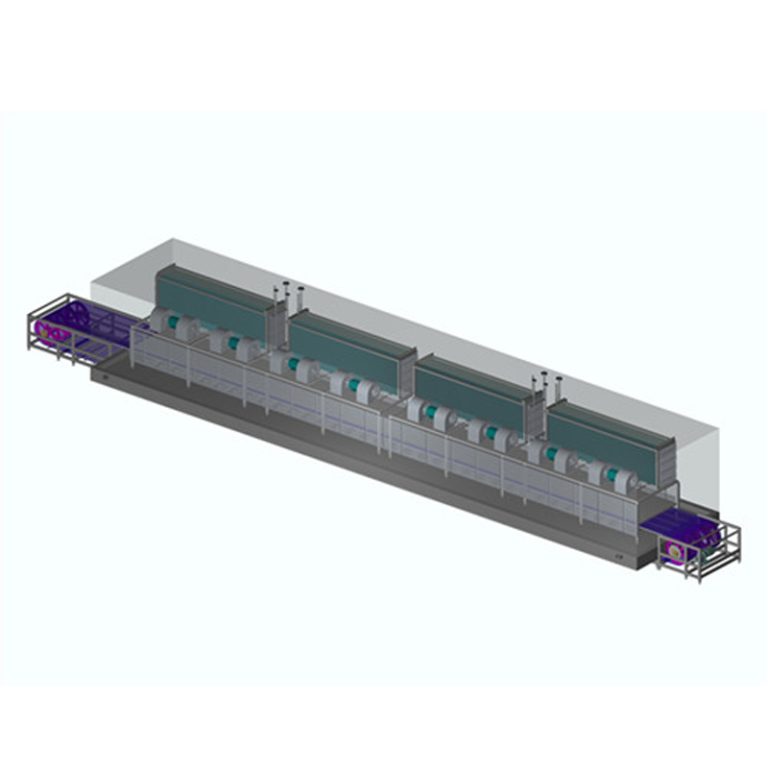
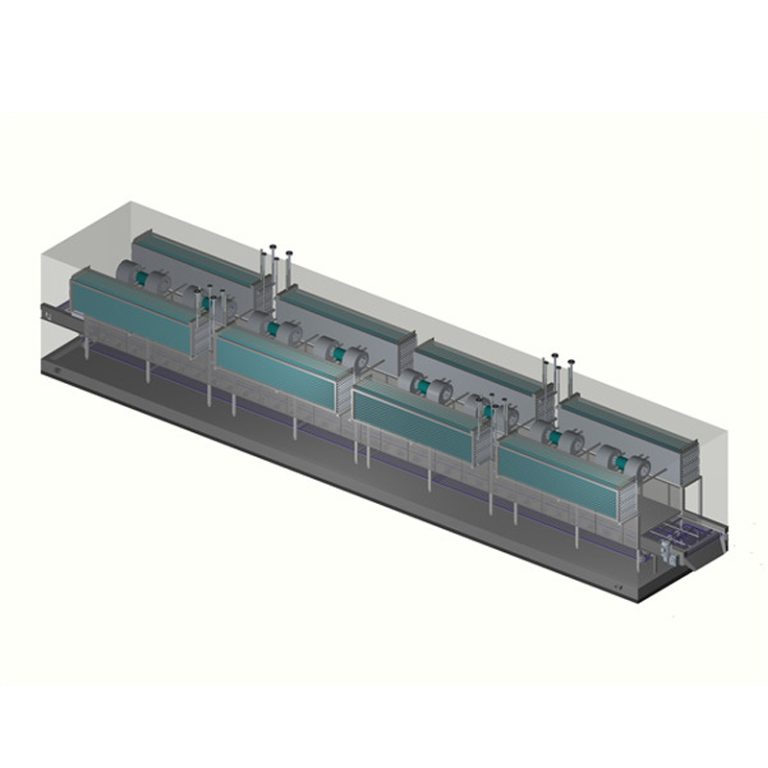
For small free-flowing items such as peas, diced carrots, berries, shrimp, and similar pieces, a fluidized bed tunnel freezer can be a strong candidate. YONGXING’s fluidized bed tunnel information describes temperatures around minus 30 to minus 40 C and freezing times of 3 to 15 minutes for suitable smaller products. Where flat, wet, or delicate pieces need strong air contact on a belt, an impingement mesh belt freezer offers a different route, with listed chamber temperatures around minus 35 to minus 45°C, adjustable freezing time of 10 to 50 minutes, and configurable belt width and length.
Longer Residence Time In Limited Space
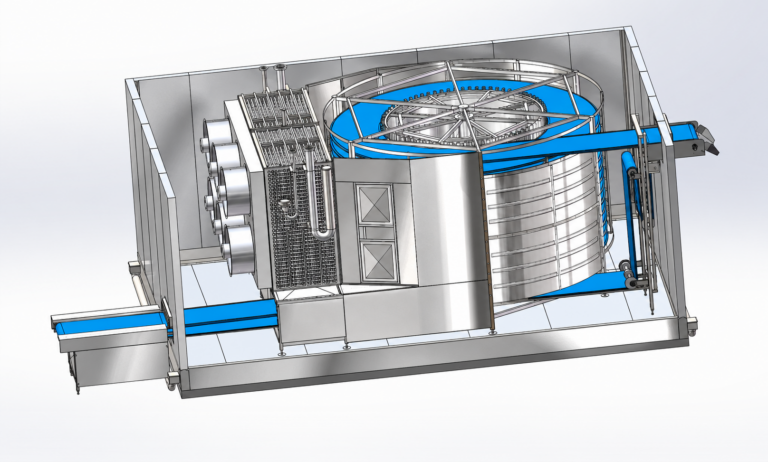
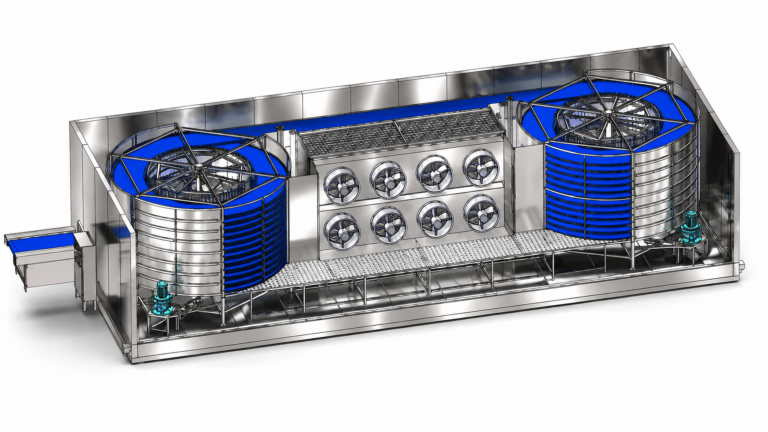
When the factory needs more freezing path but has limited floor length, spiral systems deserve a closer look. YONGXING lists the single spiral freezer at 0.2-2.0 t/h and positions it for small and medium plants, including heavier or extrusion-sensitive foods such as tray-packed fish, roasted meat, and boxed meals. The double spiral freezer is listed at 0.5-4.0 t/h for medium and large plants, with a footprint that can be about 30%-40% lower than a single spiral design under the same capacity.
What To Send Before Final Sizing
A clean inquiry saves several rounds of unclear quotation. It also reduces the risk of comparing two proposals that are not based on the same product duty. For a serious freezer capacity calculation, send enough information for the engineering team to check heat load, belt format, residence time, refrigeration demand, and layout together.
Data For A Useful Quotation
The request should include product photos, product dimensions, unit weight, hourly target, daily target, inlet temperature, outlet or core target, moisture condition, packaging status, expected operating hours, refrigerant preference, electrical standard, room size, ceiling height, upstream equipment, downstream packing speed, and cleaning method. YONGXING usually offers pricing within 1-2 workdays after receiving detailed requirements, while production time is tied to capacity and size, often about 30-120 working days after deposit.
Project Support After The Number Is Clear
Capacity is not finished when the tons-per-hour range is chosen. Belt access, evaporator cleaning, drainage, service clearance, control settings, installation route, and commissioning also affect whether the freezer can hold the stated output. YONGXING freezing equipment covers IQF equipment, spiral freezers, impingement tunnel freezers, plate freezers, food processing machines, and production line support. Its manufacturing setup includes automatic laser cutting, automatic welding, and CNC punching equipment, backed by engineers with long refrigeration-field experience and CE-related certification.
For buyers, the best next step is not to ask for the largest model first. A focused freezer capacity discussion should confirm the hardest product, the real effective hours, and the layout limits. After that, the capacity number becomes a decision tool instead of a guess. If you would like to learn more, please read this article.
Q1: What is the simplest way to estimate IQF freezer capacity?
A1: Divide the target daily frozen output by the effective freezing hours, then adjust for product heat load, inlet temperature, belt loading, cleaning time, defrost, and realistic future demand.
Q2: Why can two products with the same hourly weight need different freezer sizes?
A2: Thickness, water content, surface moisture, inlet temperature, packaging, and spacing all change heat transfer. A small loose product may freeze quickly, while a thick cooked portion needs a longer residence time.
Q3: What information helps YONGXING size an IQF production line?
A3: Product name, photos, size, weight, hourly output, inlet and outlet temperature, refrigerant, room dimensions, upstream and downstream equipment, cleaning needs, and special handling risks are the most useful starting points.