

The early spiral chillers and spiral freezer systems were designed to provide compact freezing for food processors who needed to maximize output within limited space. Initially, these systems focused more on mechanical compactness than on energy performance, often relying on static air distribution and manual controls. As industrial food production expanded, the need for continuous freezing systems became evident. Manufacturers began developing spiral freezers capable of handling high-volume production lines while maintaining consistent product quality.
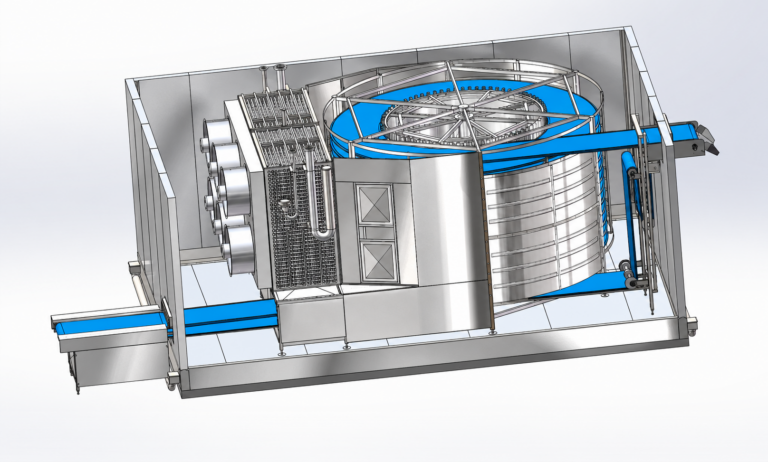
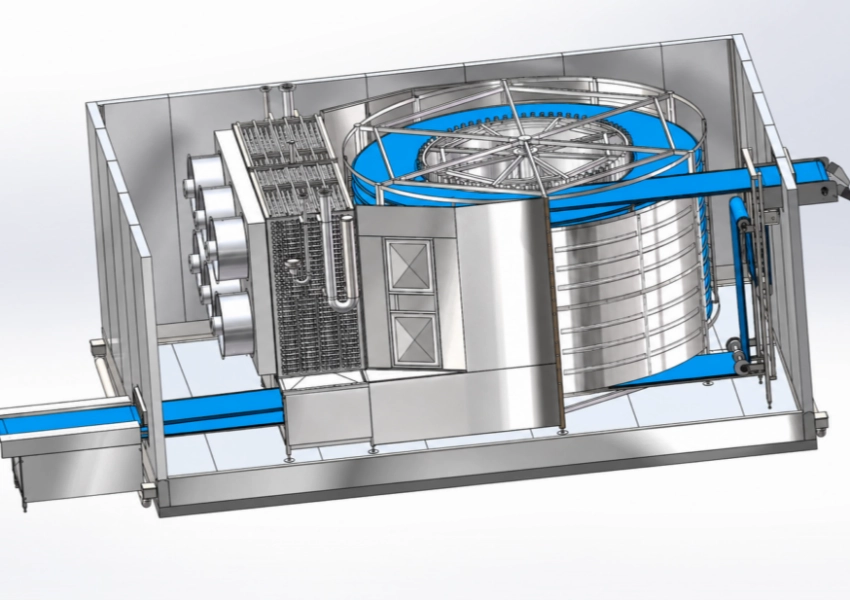
With the introduction of continuous operation models such as the single spiral freezer, frozen food could move quickly through a tightly wound spiral path, ensuring uniform cooling and minimal footprint. Frozen food moves quickly through the spiral freezer, cooling fast thanks to its tight spiral design. Over time, automation and precision engineering further refined these machines, reducing manual intervention while improving consistency and sanitation standards across facilities.
Key Engineering Principles Behind Spiral Freezers
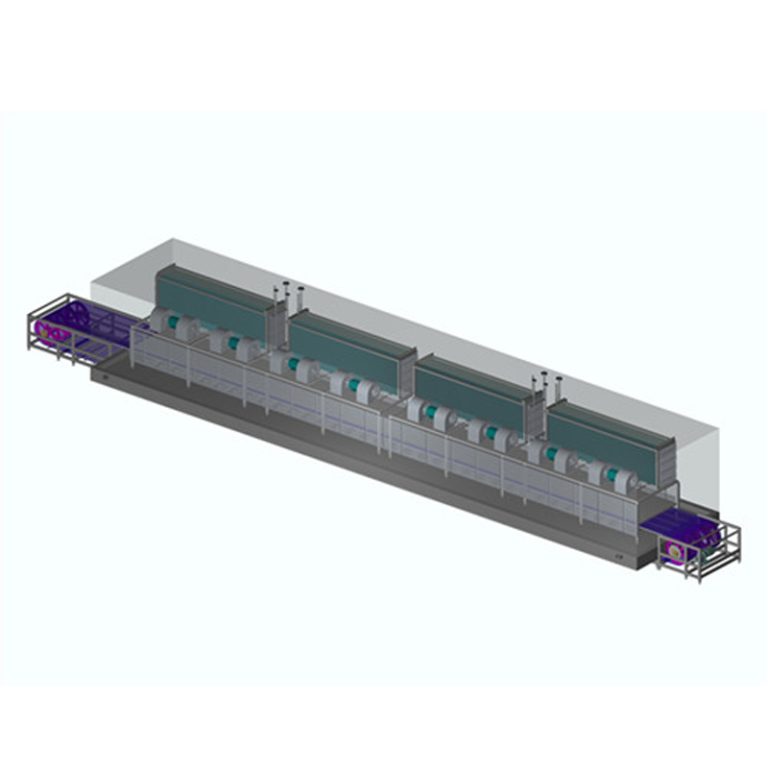
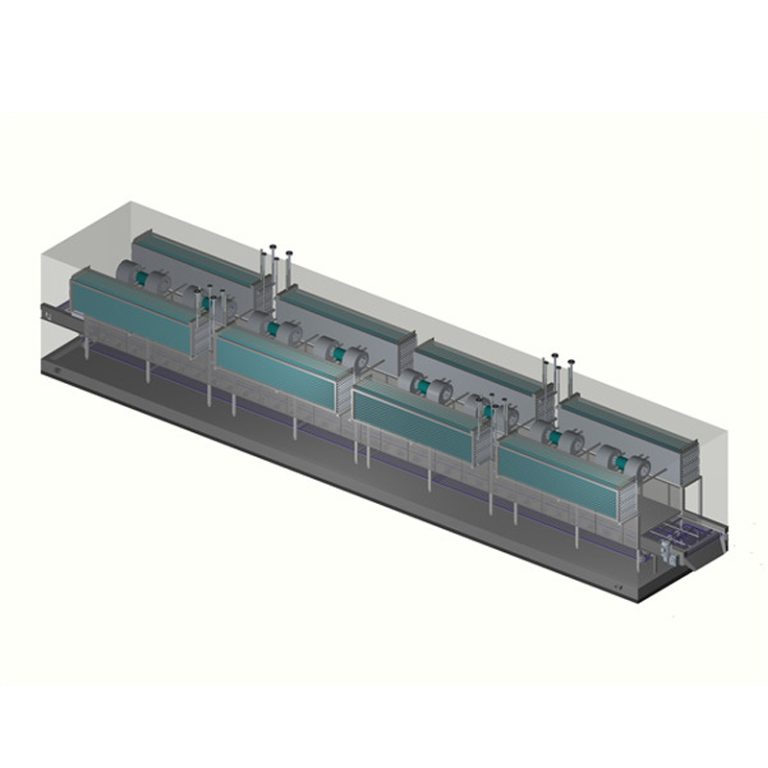
Spiral freezers operate on fundamental principles of thermal efficiency and space optimization. The core mechanism is a spiral conveyor system that maximizes surface area exposure within a compact footprint. Efficient Space Utilization: Compared with horizontal tunnel freezers, the footprint is greatly reduced under the same capacity. Controlled airflow ensures even temperature distribution across all layers of the product stack.
Modern designs incorporate modular construction that allows customization for different food categories — from seafood to bakery goods — enabling processors to achieve specific freezing curves based on moisture content and density. Automatic Continuous Production: Can be seamlessly connected with the front-end forming, powdering, and cooking lines and the back-end packaging lines to realize automatic production with high efficiency and low labor demand. These engineering innovations have made spiral chillers indispensable for integrated food processing environments.
What Innovations Are Leading Manufacturers Bringing to Spiral Freezer Technology?
Advanced Refrigeration Systems for Energy Optimization
Saving energy is now a major goal in making modern spiral freezers. Variable frequency drives (VFDs) actively control how the compressor runs. They match the cooling load needs. This action cuts down power use. Heat recovery systems catch leftover heat from the compressors. They send this heat to other plant operations. For instance, facilities use it for heating water or warming rooms.
Equipment manufacturers are moving toward low-GWP refrigerants. Examples include CO₂ and hydrocarbons. This change helps meet strict environmental rules. Products must follow international, national, and industry guidelines. Engineers should plan for safety right from the start. Furthermore, factories must carefully control the production process. This care guarantees safety at every step. This shift ensures companies follow the rules. It also builds up their green reputation.
Hygienic Design and Sanitation Improvements
Cleanliness stays at the heart of every industrial freezing task. Stainless steel frames lower the chance of bacteria build-up. They also resist rust in very cold settings. Many new spiral chillers include CIP (Clean-in-Place) systems. These features allow automatic cleaning cycles without taking the machine apart. This function is a huge benefit for busy plants that process meat or seafood. Open-access designs improve inspection speed. Workers can quickly reach the belts and evaporator parts during regular upkeep. This easy access ensures plants meet global HACCP standards.
How Does Integrating Spiral Freezers Enhance Production Line Efficiency?
Streamlining Workflow in Continuous Production Environments
Integration plays a decisive role in maximizing output efficiency within continuous processing plants. Spiral freezers enable seamless transitions between cooking, cooling, and packaging stages without intermediate handling steps that risk contamination or deformation. Automatic Continuous Production: Can be seamlessly connected with the front-end forming, powdering, and cooking lines and the back-end packaging lines to realize automatic production with high efficiency and low labor demand.
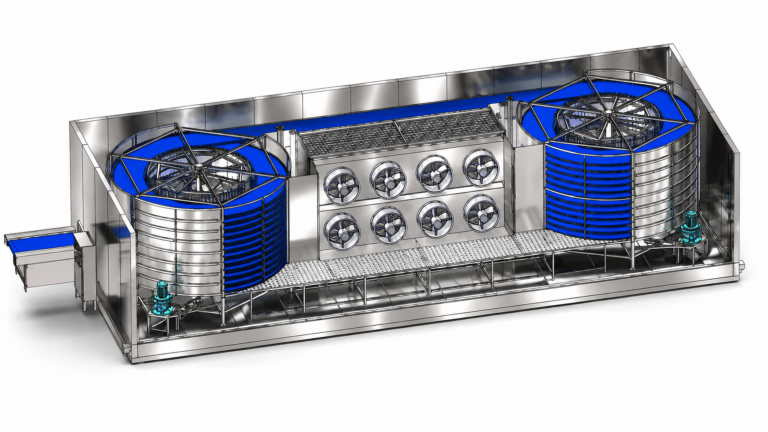
Consistent freezing rates achieved by equipment such as the double spiral freezer improve downstream packaging accuracy while stabilizing shelf life performance across large-scale batches.
Custom Configuration for Specific Product Requirements
– Meat and Poultry Processing Lines: Rapid crust freezing preserves texture integrity while maintaining internal moisture balance through controlled airflow design.
– Bakery and Confectionery Applications: Gentle air velocity prevents deformation of delicate products like pastries or chocolate-coated items during solidification phases.
– Seafood and Ready-to-Eat Meals: Multi-zone temperature control ensures uniform freezing despite varying densities within composite dishes or mixed seafood assortments.
How Are Sustainability Goals Shaping Modern Spiral Freezer Design?
Energy Efficiency as a Core Design Objective
Being green is no longer just about following rules. It is now a main daily goal for manufacturers around the world. Better insulation materials reduce heat loss during working cycles. At the same time, smart defrost systems cut down on machine stops, and they do this without using too much power. The units have a fairly small insulation volume. They feature a long heat exchange path, and they also boast low energy use. Together, these updates lower the carbon footprint. This benefit applies across the whole production chain.
Eco-Friendly Refrigerant Adoption Trends
The industry is moving away from ammonia-based systems. It is choosing CO₂ or hydrocarbon options instead, and this change is a strong step toward greener factory work. Following global F-gas rules supports good manufacturing habits, and it also ensures long-term business success. This is vital as environmental laws get stricter.
Where Is Spiral Freezer Manufacturing Technology Headed Next?
Integration with Industry 4.0 Frameworks
Machine learning algorithms are increasingly embedded into freezer control architectures to refine operational parameters automatically based on live feedback loops. Cloud-based connectivity supports remote diagnostics across multiple facilities—allowing supervisors to benchmark performance globally without physical presence on-site. This transition aligns perfectly with Industry 4.0 principles, where digital integration drives predictive intelligence throughout cold chain operations.
Modular Scalability for Flexible Production Demands
Future-ready spiral chillers emphasize modular scalability; plug-and-play modules allow rapid capacity expansion without major infrastructure overhauls. Cross-line integration between forming machines, cookers, blasters, and conveyors enhances adaptability during seasonal demand fluctuations or new product introductions—ensuring processors remain agile in competitive markets.

About YONGXING
As a professional IQF freezing equipment manufacturer specializing in research, design, production, sales, and installation of quick-freezing equipment, we uphold our core values: “attention to detail, teamwork, constant innovation, and offering our satisfied service.” YONGXING is a manufacturing enterprise specializing in research, design, production, sales, and installation of quick-freezing equipment. Our advanced facilities use laser cutting centers and robotic welders operated under strict quality management systems certified by CE standards. From compact single spirals suited for small factories to double spirals built for large-scale exporters, we deliver solutions tailored precisely to each client’s process flow.
To discuss customized configurations or explore integration options suited for your specific production environment, please contact us directly through our official website inquiry form. If you would like to learn more, please read this article.
FAQ
Q1: What differentiates spiral freezers from tunnel freezers in industrial applications?
A1: Spiral freezers use vertical conveyor loops that maximize surface exposure within minimal floor space compared to horizontal tunnels; this enables higher throughput per square meter while maintaining uniform airflow distribution critical for IQF results.
Q2: How do modern spiral chillers contribute to energy savings?
A2: By integrating variable frequency drives for compressor modulation and employing advanced insulation materials alongside heat recovery units that recycle waste heat into facility utilities.
Q3: Which industries benefit most from modular spiral freezer configurations?
A3: Meat processing plants seeking flexible capacity scaling during seasonal peaks, bakery producers requiring gentle airflow, and seafood exporters needing precise multi-zone temperature control all gain substantial operational advantages from modular designs aligned with Industry 4.0 connectivity frameworks.