
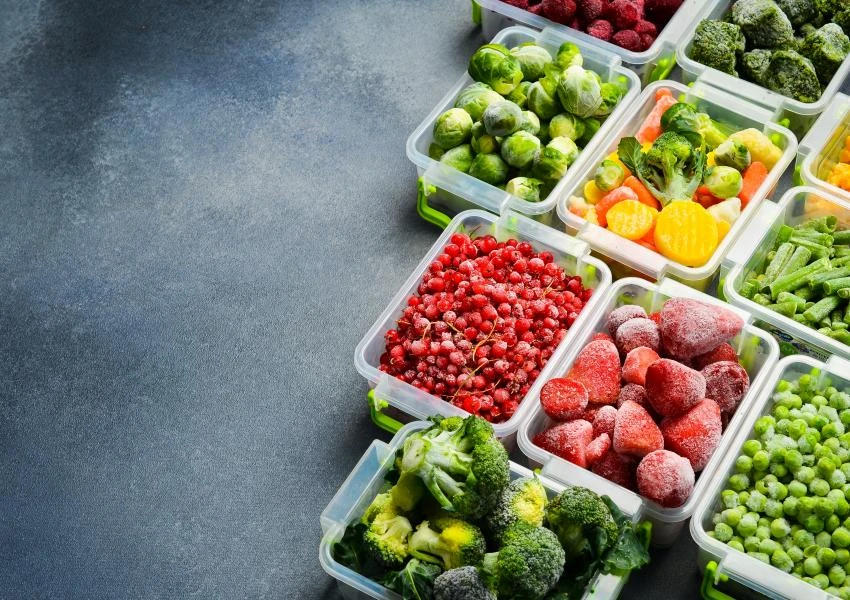
Before individual quick freezing (IQF) equipment became available, bulk freezing methods dominated food preservation. These older methods frequently caused uneven cooling, large ice crystal formation, and degradation of texture and flavor. As industrial-scale food production expanded, the need for a process capable of maintaining product individuality and quality became urgent. This gave rise to IQF technology, which revolutionized how perishable foods were preserved for global distribution.
Technological Principles Behind IQF Freezing
At the core of IQF technology lies the principle of rapid heat transfer. When products are exposed to high-velocity cold air or cryogenic gases, heat is extracted quickly from each particle’s surface and core. The faster the temperature drops through the critical ice-crystal formation zone, the smaller the crystals formed within cells—preserving structural integrity and nutrient content.
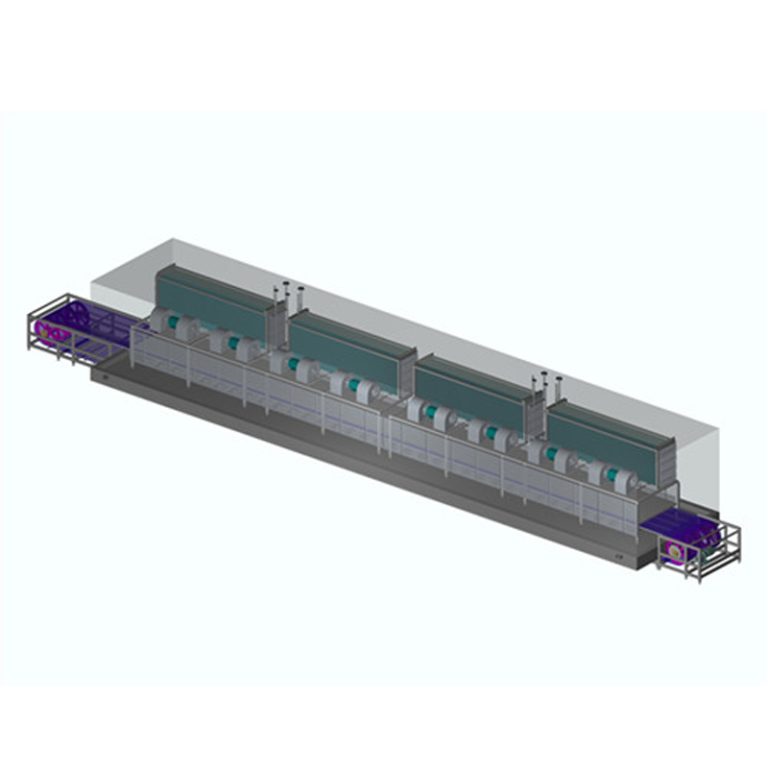
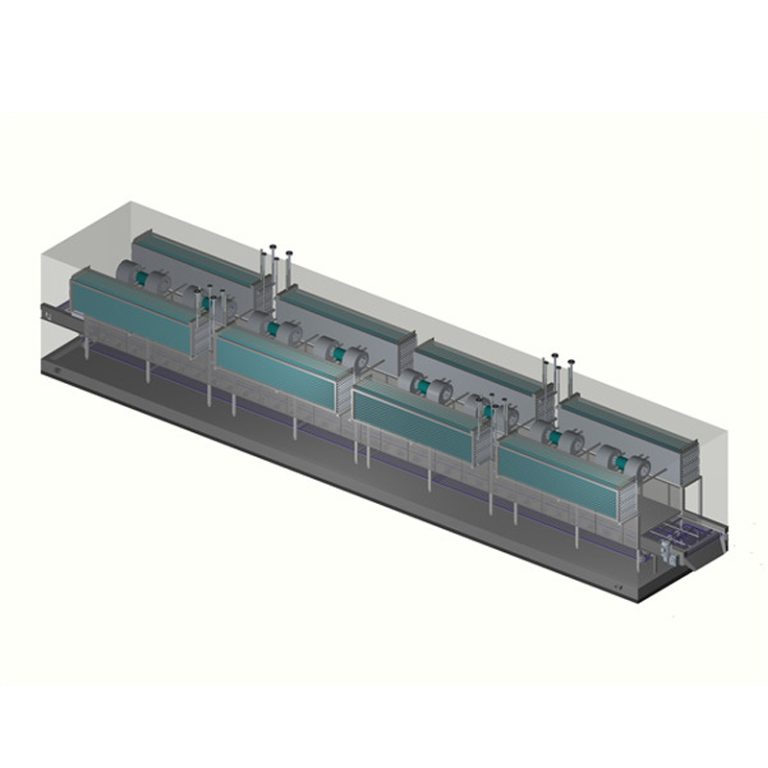
When the products pass through the freezer on the conveyor belt, the upper and lower surfaces are blown in opposite directions by uniform high-speed airflow; this design ensures that surface temperature decreases rapidly and freezing is completed in a short time.
Engineering Innovations in IQF Equipment Design
Advances in Airflow and Heat Exchange Systems
Modern IQF engineering focuses on controlling airflow distribution and optimizing heat exchange efficiency. Uniform airflow across product surfaces ensures consistent freezing results regardless of shape or size. Variable-speed fans combined with adaptive control algorithms maintain optimal conditions even under fluctuating loads.
The freezing chamber temperature can reach -35℃ to -45℃, which can reduce the food core temperature to -18℃ in a short time and quickly pass through the maximum ice crystal formation zone. By improving evaporator cleanliness through hybrid defrosting methods like water flushing and hot ammonia defrosting, energy consumption is reduced without compromising performance—an approach embedded in our fluidized tunnel systems.
Material and Structural Enhancements in IQF Freezers
Strong stainless steel frames do not rust easily. They are now the normal choice for clean designs that meet HACCP rules. Also, modular building methods let users change the machine layout easily. This flexibility helps handle different output sizes or new food types. Better insulation materials help stop heat leaks during non-stop work. This upgrade makes the machine last longer. It also brings down daily power bills.
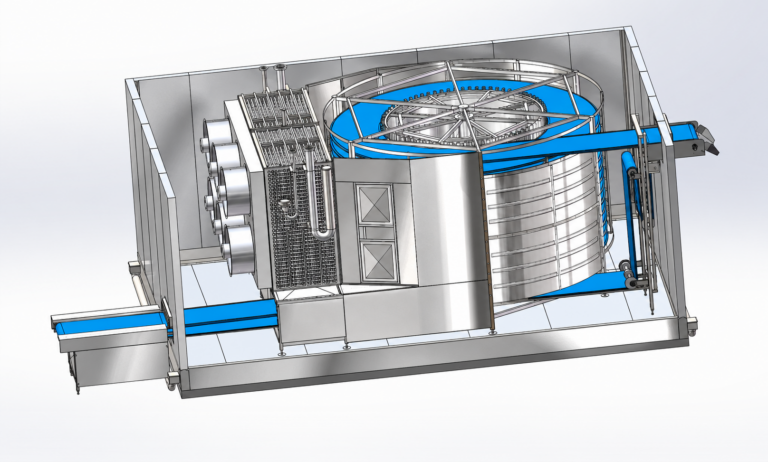
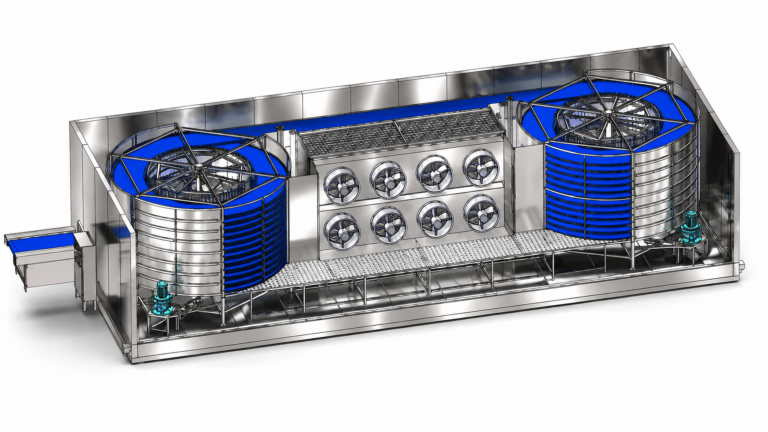
Our Single Spiral Freezer is a great example of these ideas. Its smart spiral design makes the best use of floor space. At the same time, it keeps a steady belt speed. This gentle movement is perfect for soft items like tray-packed fish or ready meals.
Automation and Digitalization in Modern IQF Systems
Role of Smart Sensors and Control Software
Automation has transformed how IQF freezers operate within smart factories. Sensors continuously monitor parameters such as air velocity, humidity, and temperature uniformity across zones. Predictive analytics derived from these sensors enable proactive maintenance scheduling before failures occur. Automated feedback loops adjust fan speed or belt motion instantly to preserve target freezing curves under varying product loads.
Integration with Industry 4.0 Frameworks
Connectivity between individual quick freezing units and centralized management platforms facilitates real-time data sharing across entire production ecosystems. Machine learning algorithms interpret process data to dynamically refine operating parameters—balancing throughput against energy efficiency automatically. This digital integration aligns with Industry 4.0 objectives where traceability, optimization, and sustainability converge into one intelligent networked system.
Energy Efficiency and Sustainability in IQF Operations

Reducing Energy Consumption Through Design Optimization
Energy efficiency remains central to next-generation IQF equipment design. Regenerative heat recovery systems capture waste heat from compressors for reuse elsewhere in processing plants. Low-GWP refrigerants reduce environmental impact while maintaining cooling capacity at extreme sub-zero temperatures.
Relatively small insulation volume, a long heat exchange path, and low energy consumption characterize our Hydraulic Plate Freezer, which delivers high-efficiency conduction-based freezing with minimal power draw per ton processed.
Waste Minimization and Environmental Considerations
Controlled humidity management reduces dehydration losses during prolonged storage cycles; meanwhile, defrost water recycling within utility loops cuts overall water consumption significantly. Compliance with global environmental standards ensure that each installation supports sustainable food processing operations without sacrificing output reliability.
Applications Across Food Categories Using IQF Technology
Fruits, Vegetables, and Berries Processing Enhancements
IQF technology keeps the shape, color, smell, and vitamins of the food. It does this by trapping moisture inside the cells right away during freezing. This method is perfect for strawberries or small broccoli pieces, and they move through fluidized bed tunnels. Inside, cold air lifts each piece separately. This floating action stops the food from sticking together.
Meat, Seafood, and Poultry Freezing Solutions
Muscle proteins like shrimp or chicken fillets need special care. Keeping their meat fibers whole changes how buyers feel after thawing. Workers apply advanced ice glazing right after the IQF freezing step. This shiny ice layer stops oxygen damage during long storage, which also keeps the natural shine on the food surfaces.
Bakery, Dairy, and Ready-to-Eat Product Applications
IQF solutions also freeze soft pastries or cheese cubes very well. They do this without ruining the food’s shape. Automated conveyor belts connect straight to the final packing areas, which creates a smooth workflow for frozen meals. It boosts the daily output across the whole factory.
Future Directions in Individual Quick Freezing Equipment Development

Emerging Technologies Shaping Next-generation IQF Systems
Mixed cooling methods combine cryogenic gases with standard mechanical compressors, which offer better choices. Users can switch between super-fast freezing and long, steady runs. Also, scientists are testing special nano-coatings on evaporator parts. These coatings help heat move better and also lower the amount of frost buildup. This upgrade keeps the machines running much longer without stops.
Market Trends Driving Innovation Adoption in the Food Industry
More buyers now want high-quality frozen foods, which makes factories focus on keeping food textures perfect. They can only reach this goal with individual quick-freezing methods. At the same time, manufacturers of plant-based meats use IQF equipment more often. They need it to protect delicate ingredients that easily lose water in storage, and this careful freezing ensures a steady taste. The food stays delicious as it travels through global cold shipping networks.
How YONGXING Supports IQF Freezer Projects?
Before concluding our exploration of this transformative field, it’s worth mentioning who stands behind many technological breakthroughs shaping today’s market: YONGXING, a professional IQF freezing equipment manufacturer. We specialize in designing advanced quick-freezing solutions, including spiral freezers, impingement tunnels, hydraulic plate units, and full-scale automated lines serving seafood processors to bakery producers alike. Guided by our philosophy “Quality oriented, integrity management,” we combine strong technical expertise with nearly 13 years of engineering experience—delivering reliable machinery certified under CE standards while offering complete installation support worldwide.
You might want custom advice about adding new IQF freezers to your factory. Or, you might want to improve your current machines to save over 30% on energy. We welcome you to contact us right away through our website. There, our friendly experts will give you clear project advice. We will make sure our plans match your business goals. If you would like to learn more, please read this article.
FAQ
Q1: How does individual quick freezing differ from conventional blast freezing?
A1: Old bulk blast methods freeze big batches very slowly. This slow process makes large ice crystals that break the food cells. Individual quick freezing is completely different. It separates every single piece under fast-moving cold air. This creates tiny ice crystals. The small crystals protect the food’s texture after it thaws.
Q2: Which industries benefit most from adopting IQF equipment?
A2: Many different businesses see great benefits from this technology. Seafood processing plants, meat packers, fruit sellers, and busy bakeries all use IQF freezers. They use them to keep their food quality high during long shipping trips. Best of all, they do not need to add harmful chemical preservatives.
Q3: What factors should be considered when selecting an IQF freezer model?
A3: Buyers must look at several important things. First, check the product type, like small pieces or large blocks. Next, find out the needed hourly output, usually between 0.1 and 4 tons per hour. Floor space matters too. Small rooms might need a spiral shape instead of a long tunnel. Finally, think about the automation level. Users might want to connect early cooking steps or final packing machines into one simple digital system.