
 Individual Quick Freezing (IQF) technology stands as a significant advance in industrial food preservation. Unlike traditional freezing that turns bulk materials into solid blocks, this method freezes each piece separately. It keeps the original shape and quality intact. The process stops clumping and allows accurate portioning in later production steps. Over time, IQF systems developed from simple air-blast tunnels into modern mechanical and cryogenic units. These units now manage many different food textures with ease.
Advantages of IQF in Modern Food Processing
The benefits of IQF go further than rapid freezing alone. Products move quickly through the ice crystal formation zone, and this reduces cellular rupture along with moisture loss. Individual freezing also gives improved portion control and lowers product waste at the packaging stage. Producers who want better operational efficiency find that IQF systems fit smoothly into automated lines, which support continuous production and require only minimal labor input.
Working Principles of IQF Equipment
Fundamental Mechanism Behind IQF Freezing
IQF machines reach strong performance levels through controlled heat transfer that relies on either mechanical refrigeration or cryogenic cooling media such as liquid nitrogen or CO₂. Fast heat removal creates microcrystals instead of large ones, and this protects product structure at the cellular level. Workers manage temperature gradients with care so every piece arrives at sub-zero equilibrium without any surface dehydration. Elements like size distribution and moisture content clearly affect freezing kinetics. For this reason, modern IQF freezers use variable airflow speeds that adjust to suit different materials.
Airflow Design and Thermal Distribution in IQF Systems
Even airflow circulation remains very important for consistent freezing quality on all particles. The exact method depends on the model type, such as fluidized bed, spiral belt, or impingement tunnel, so the airflow may strike vertically or move spirally around the conveyors. In fluidized designs such as our Fluidized Bed Tunnel Freezer, high-velocity cold air lifts products into a fluidized state. This action delivers 360° exposure to cold streams and creates uniform crystal formation across every surface. Such engineering cuts energy waste while it keeps even temperature distribution inside the entire chamber.
Key Components of an IQF Machine
Core Structural Elements
Each IQF machine has a conveyor system that carries products steadily through separate thermal zones where evaporators pull out latent heat, and fans spread chilled air evenly over all surfaces. Heat exchangers improve refrigerant efficiency at the same time that insulation panels hold chamber stability even during operation at -40°C. The tunnel uses 304 stainless steel approved for coming into contact with food, and this design allows easy cleaning because everything underneath the surface moves into place. These hygienic designs meet HACCP standards that remain critical for global food safety compliance.
Control Systems and Automation Features
Modern IQF equipment uses PLC-based automation, which delivers precise temperature monitoring and adjustable speed control through Variable Frequency Drives (VFDs). Data logging modules track performance metrics for predictive maintenance scheduling, and IoT-enabled sensors supply real-time diagnostics from remote locations, which reduces downtime in a significant way.
Types of IQF Freezers Used in Industry

Fluidized Bed Freezers
Fluidized bed freezers perform very well when processing small particulate foods like peas or diced fruits because they suspend items on high-pressure air cushions throughout the freezing stage. This process builds a 360° heat exchange environment so every piece freezes quickly and evenly from surface to core. The result produces non-sticking individual units that work perfectly for bulk packaging operations needing strict portion control.
Spiral Belt Freezers
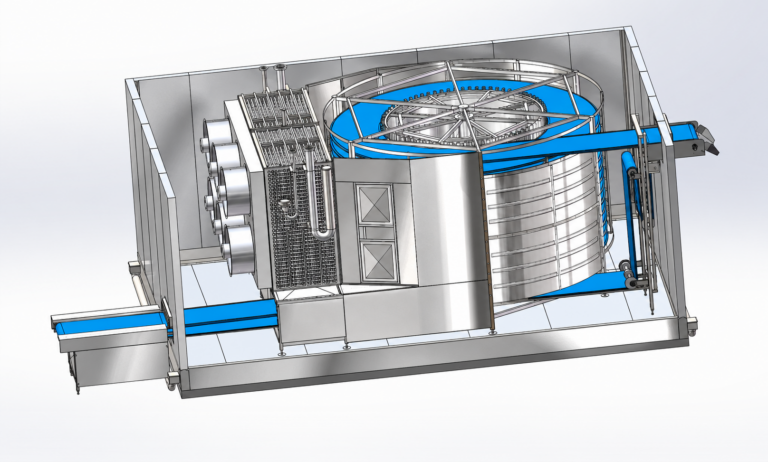
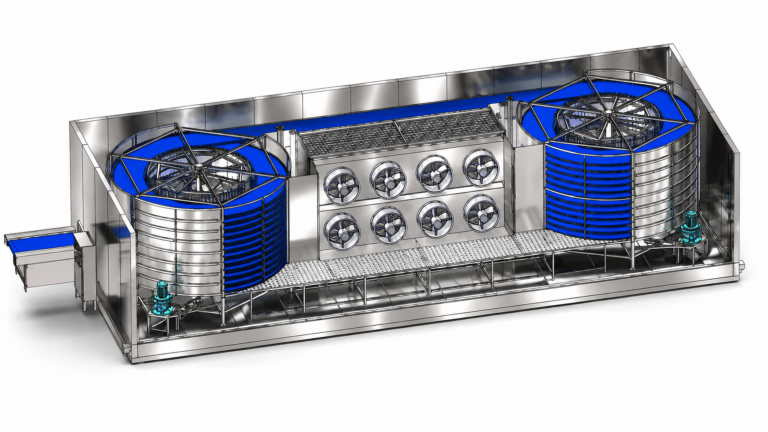
Medium-to-large items often need longer residence times inside the freezer, and for these cases, we recommend our single spiral freezer. It includes a compact vertical layout that reaches high throughput even within limited floor space, and it maintains consistent air velocity along the entire spiral path.
Tunnel Freezers and Cryogenic Systems
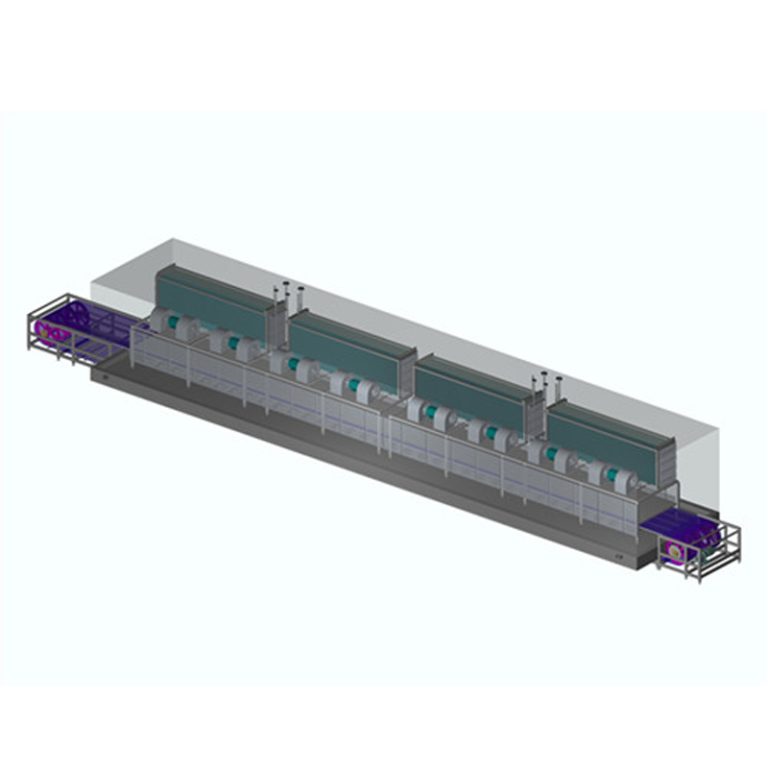
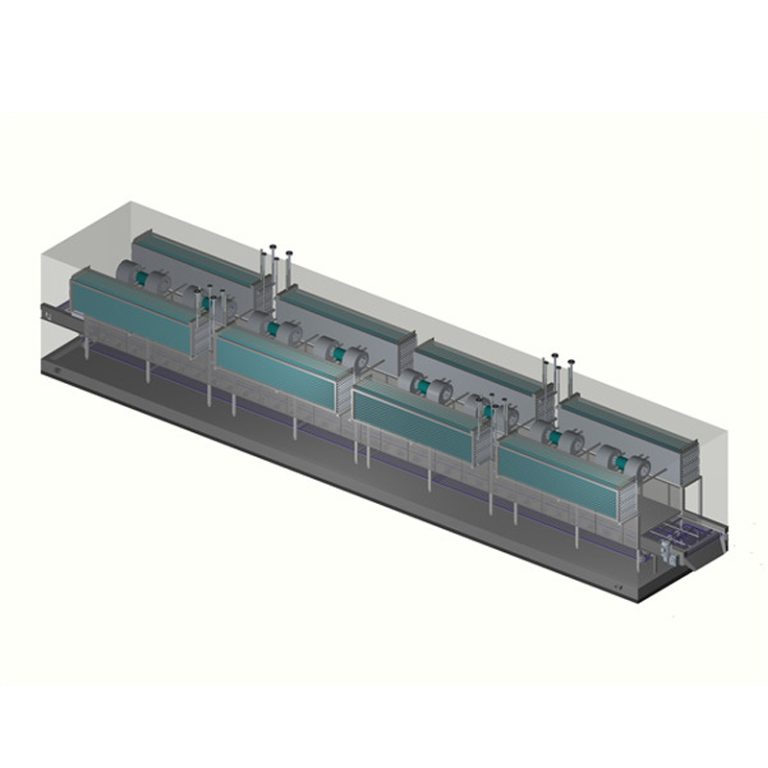
Tunnel freezers rely on linear conveyors placed inside multi-zone chambers where airflow temperature drops gradually along the path, and this change creates balanced core cooling for each item. Cryogenic variants use liquid nitrogen jets that achieve ultra-fast crust freezing. The rapid action suits delicate seafood or premium meats, especially in situations where texture retention holds great importance.
Factors Affecting Freezing Efficiency in IQF Equipment
Thermal Load Management
Freezing efficiency stays closely linked to product loading density because excessive stacking blocks airflow penetration, and this situation creates uneven results. When plants balance throughput with compressor capacity, they improve energy consumption per kilogram frozen, and this balance serves as a key metric for industrial profitability.
Equipment Design Parameters
Performance stability relies on evaporator sizing together with fan configuration and insulation quality since all these elements are designed to reduce frost buildup between defrost cycles. Efficient defrosting systems that combine water flushing and hot ammonia methods increase uptime by keeping evaporator surfaces clean at all times.
Operational Practices
Pre-cooling stages applied before entry lower thermal shock, which improves the overall energy balance, and routine sanitation at the same time keeps airflow paths clear so uniform results appear across every batch.
Technological Innovations Enhancing IQF Performance
Energy Optimization Techniques
Variable frequency drives change fan speeds according to current load levels, and this adjustment lowers electrical consumption during partial operation cycles. Integrated heat recovery loops collect waste heat from compressors and redirect it for facility heating, which, therefore, reduces total energy costs in a notable manner.
Digitalization and Smart Monitoring
IoT-driven analytics support predictive maintenance because they link vibration patterns with temperature variance and runtime data. This connection lets operators step in before mechanical faults grow into major downtime events.

Maintenance Strategies for Sustained Efficiency in IQF Systems
Regular inspection schedules cover cleaning evaporator coils, checking conveyor tension alignment, and verifying lubrication points because these actions serve as critical steps that maintain optimal thermal exchange rates for a long period.
Introduce YONGXING
Before concluding, it is worth noting who stands behind these technologies—YONGXING. With over a decade of expertise, we focus on designing research-driven quick-freezing machinery that meets industrial needs around the world. Our philosophy, “Quality-oriented Integrity Management,” directs every stage from concept engineering through after-sales service, and advanced facilities fitted with automatic laser cutters, robotic welders, and precision punching centers guarantee that every IQF freezer satisfies CE-certified standards for reliability, durability, and hygiene excellence.
For batch-style applications like block meats or seafood slabs, our Hydraulic Plate Freezer supplies uniform compression-based cooling that fits best where a compact footprint and high output speed matter most, and responsive technical support teams stand ready globally through our contact portal at Contact Us. If you would like to learn more, please read this article.
FAQ
Q1: How does an IQF freezer differ from conventional blast freezers?
A1: An IQF freezer isolates each item using directed airflow, enabling faster passage through the crystallization zone, whereas blast freezers rely on slower bulk cooling that often leads to clumping or texture loss.
Q2: What maintenance schedule ensures peak performance?
A2: Operators should perform weekly coil cleaning, monthly sensor calibration, and quarterly belt inspections alongside annual refrigerant system audits, which together ensure stable long-term efficiency.
Q3: Which industries benefit most from IQF equipment adoption?
A3: Sectors including seafood, poultry, produce, bakery snacks, ready meals, and pharmaceuticals gain measurable advantages from enhanced shelf life, product integrity, and reduced waste, and these gains align well with modern cold-chain logistics demands.