

A spiral freezer is often bought when a factory needs more freezing time, more belt area, or a steadier exit temperature, but the room cannot accept a long tunnel. That is where the choice between a single spiral freezer and a double tower starts to matter.
The question is not only capacity. A plant also has to think about product height, loading density, infeed rhythm, discharge direction, floor drains, cleaning access, evaporator load, and shutdown cost. The right answer can be different for dumplings, shrimp, boxed meals, roasted meat, fish trays, or small packaged snacks.
What Changes When One Spiral Becomes Two
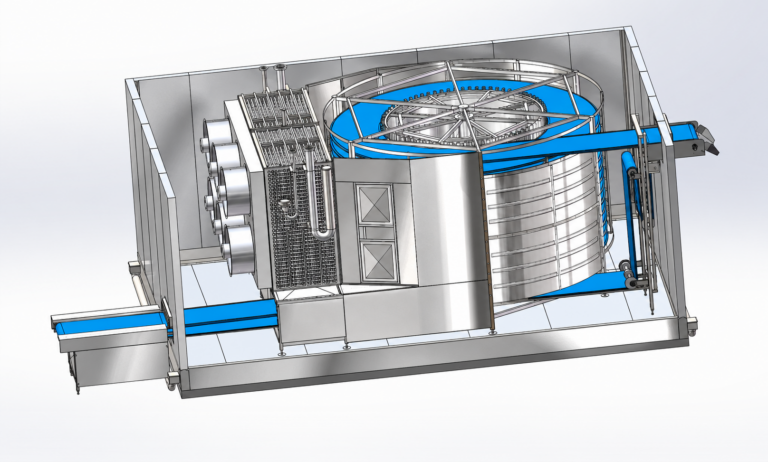
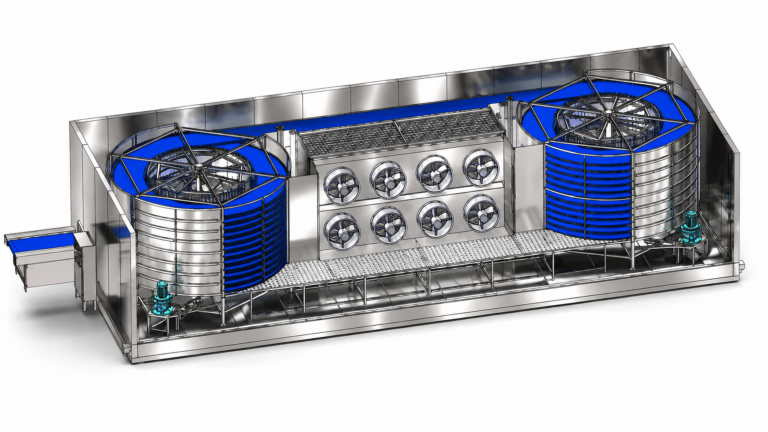
Both machines use a continuous belt path inside an insulated freezing room. Product travels through controlled cold air until it reaches the required core temperature. The difference is belt arrangement. A single tower uses one spiral path. A double tower uses two paths, giving the design more belt length and more residence time inside a compact vertical layout.
Single Tower Flow
A single tower is easier to read from an operator’s point of view. Product enters, travels around one spiral, and leaves with fewer transfer points than a more complex arrangement. YONGXING positions this industrial spiral freezer as a compact, high-efficiency, continuous quick-freezing device for small and medium food plants. The listed spiral freezer capacity range is 0.2-2.0 t/h.
This format also suits foods that need gentle handling. Larger or heavier products, tray-packed whole fish, roasted meat, boxed meals, and other extrusion-sensitive items can benefit from the steady belt movement of a single spiral route. Capacity and freezing time can rise by increasing turns or tower height, though the final design still depends on ceiling height and refrigeration load.
Double Tower Flow
A double spiral freezer is built for medium and large food plants that need continuous quick freezing with stronger throughput. YONGXING lists this format at 0.5-4.0 t/h and highlights high automation, strong freezing capacity, and a smaller floor area. Under the same capacity, its footprint can be about 30%-40% lower than a single spiral design.
That footprint advantage is valuable, but it is not a universal site drawing. Actual space depends on inlet and outlet direction, belt width, tower diameter, evaporator layout, piping, drainage, access doors, and service clearance. The double route also adds mechanical and control complexity, so maintenance discipline matters.
Capacity: Do Not Start With Tons Per Hour Alone
Nominal capacity is useful, but it is not the same as real production output. A freezer quoted for one product may not give the same result on another product with more moisture, greater thickness, higher inlet temperature, or denser belt loading. A wet dumpling, a cooked meat portion, and a packed meal tray remove heat in different ways.
Product Heat Load
Before choosing an industrial spiral freezer, list product size, unit weight, starting temperature, target core temperature, packaging form, and hourly output. Warm cooked product or weak pre-cooling gives the freezer a heavier heat load. Thick belt loading also slows cold air contact, so paper capacity becomes less useful.
For small and mid-size plants, the single tower often gives enough residence time without buying a larger system too early. It can suit steady SKUs, heavier pieces, and products that need clean belt support. Fast-growing frozen food plants may move toward a double tower when long shifts, higher line speed, and packaging automation make the extra range useful.
Line Rhythm And Bottlenecks
A spiral freezer should match upstream and downstream equipment. If forming, steaming, frying, cooling, weighing, or packaging runs slower than the freezer, a larger machine will not fix the bottleneck. If the packaging room is waiting on frozen output, a higher-capacity spiral freezing system may pay back faster. A useful comparison needs real production data: daily output, SKU mix, shift length, cleaning time, and target core temperature.
Footprint: Floor Area Is Only Part Of The Story
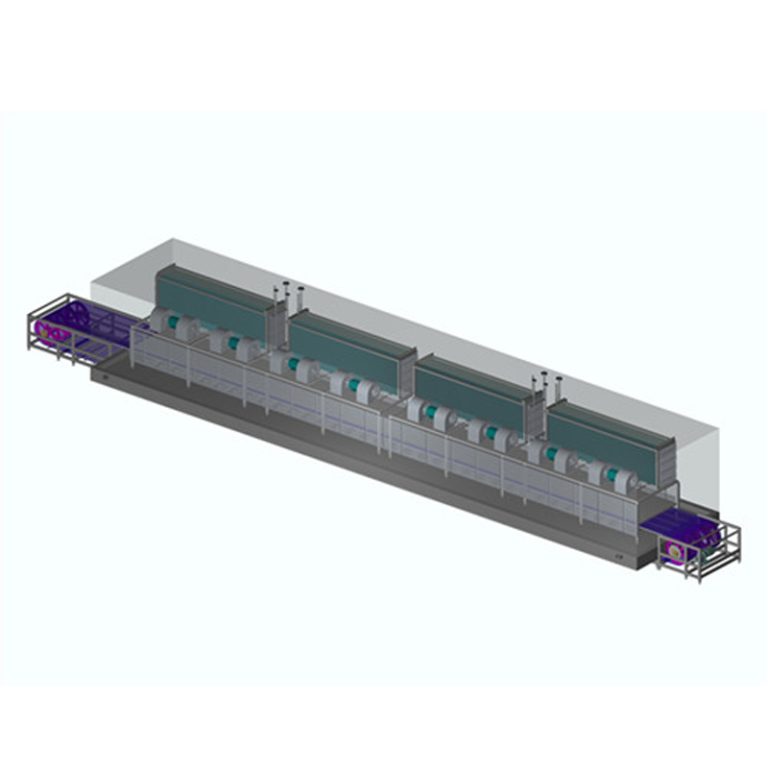
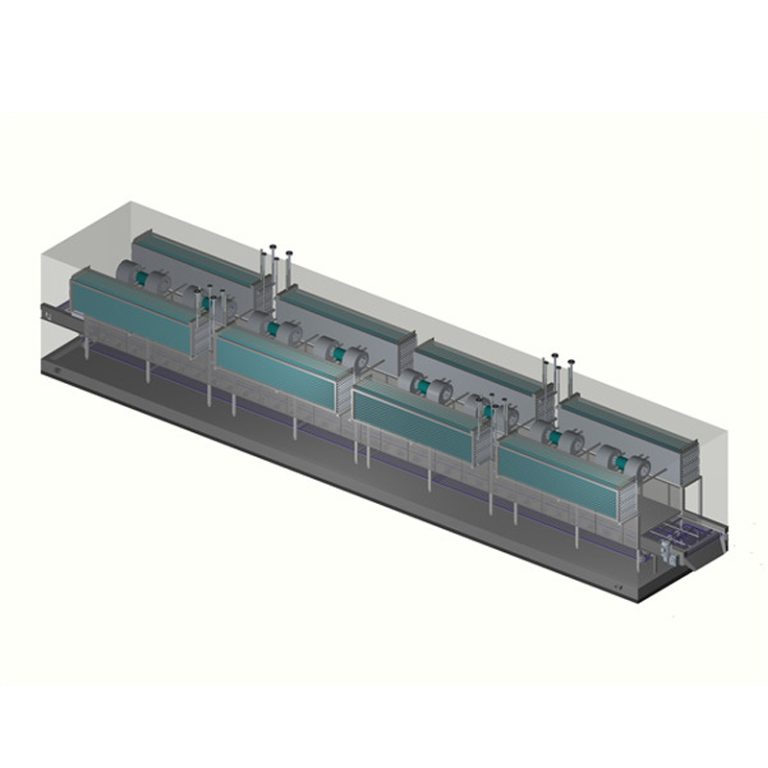
A single tower already saves space compared with a horizontal tunnel freezer because it uses height instead of line length. This helps in workshops where the freezer must sit between existing cooking and packing sections.
A double tower goes further when the plant needs more throughput inside a tighter floor area. The 30%-40% footprint reduction under the same capacity gives a useful planning direction, especially where rent, building expansion, or utility routing is expensive. Still, the buyer should check the full working envelope, not only the machine base.

Workshop Height And Access
Height can be a hidden limit. A taller tower may solve floor pressure but create questions around ceiling clearance, installation route, structural support, air circulation, and inspection access. The plant also needs space for panels, belts, drains, and refrigeration lines.
Inlet And Outlet Direction
A compact machine can still be awkward if the inlet and outlet fight the existing line flow. A single tower may be easier to fit into some layouts. A double tower can be powerful, but it needs a careful drawing so product avoids unnecessary conveyors before freezing or after discharge.
Cost: What Buyers Are Really Paying For
A double tower usually costs more than a single tower because it involves more belt path, more structural work, added drive and control needs, and higher refrigeration demand. That higher purchase price can still make sense when the factory needs bigger daily output or has no room for a longer single-tower arrangement.
A single tower can be the better cost choice when the product range is stable and the capacity target sits comfortably within 0.2-2.0 t/h. It may also reduce training and maintenance pressure in plants where the engineering team is small.
Capital Cost And Future Demand
The cheapest freezer is not always the lowest-cost decision. If output will climb soon, buying too small can create a second project and another production stop. If demand is uncertain, overspending on unused capacity creates cash pressure. A sensible review should compare current orders, realistic growth, workshop limits, and upgrade risk.
Energy, Cleaning, And Maintenance
Operating cost comes from more than power. Frost control, evaporator cleanliness, belt washing, drainage, door opening habits, product loading, and shift discipline all matter. YONGXING describes the double spiral format as having a relatively small insulation volume, a long heat exchange path, and lower energy consumption, but the exact number still needs project confirmation. A factory should also ask how belts, guides, evaporators, and drains will be reached during service.
How To Build A Practical Shortlist
A practical shortlist starts with product families. Frozen rice and flour products, meat and poultry, aquatic products, prepared dishes, ice cream, desserts, fried foods, and small packaged items can all use spiral equipment, but they do not load the belt in the same way. Some need support. Some need speed. Some need room for trays or boxes.
YONGXING’s IQF equipments range covers spiral, tunnel, impingement, and fluidized options, so the comparison does not have to stay trapped between two spiral models if the product calls for another freezing method. Loose vegetables or shrimp may need a different IQF route, while tray-packed products may stay with spiral handling.
Supplier support matters after the process choice is clear. YONGXING is a manufacturing enterprise covering research, design, production, sales, and installation of quick-freezing equipment. Its production setup includes automatic laser cutting centers, automatic welding equipment, and CNC punching machines. The technical team includes five engineers with nearly 20 years of freezing-field experience, along with 16 patents and CE-related certification.
For a real project, send product photos, dimensions, hourly output, inlet and outlet temperature, packaging form, line drawing, room size, ceiling height, refrigerant preference, and cleaning requirements to freezing equipment. A focused spiral freezing system freezer project discussion can then decide whether the plant needs a single tower, a double tower, or another quick-freezing route. For more detail, see our guide on this article.
FAQ
Q1: When is a single spiral freezer enough for a food plant?
A1: It is often enough when output falls within the required range, product handling is sensitive, the SKU mix is stable, and the plant wants a compact continuous freezer without adding unnecessary mechanical complexity.
Q2: When does a double spiral freezer become the better choice?
A2: It becomes stronger when the plant needs higher throughput, longer residence time, and a smaller footprint under the same capacity. The workshop must still have proper height, access space, refrigeration capacity, and maintenance support.
Q3: What affects spiral freezer capacity in real production?
A3: Product size, unit weight, inlet temperature, target core temperature, belt loading, surface moisture, packaging, airflow contact, cleaning time, and upstream or downstream speed all affect real capacity.