
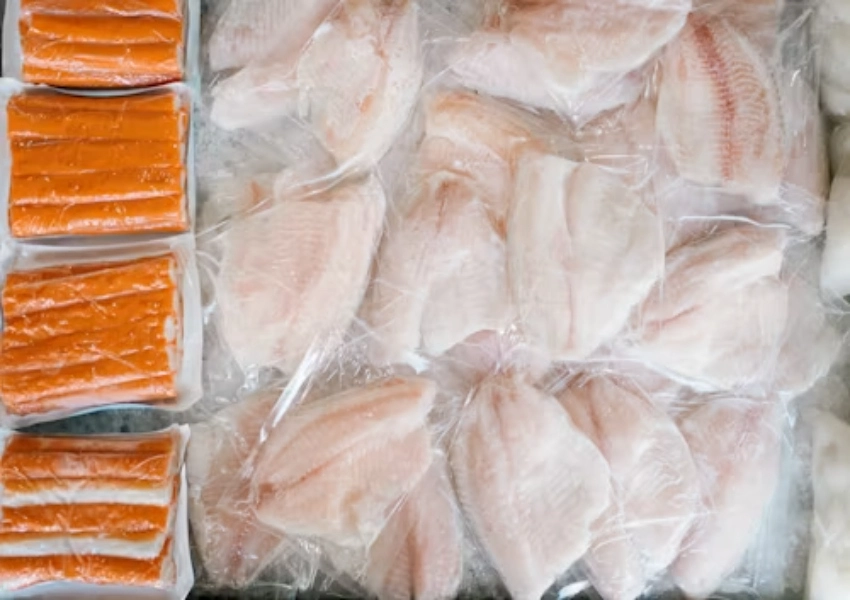
A bag of IQF shrimp, berries, diced meat, or dumplings should pour freely. When pieces leave the freezer as a hard cluster, the loss is not limited to appearance. Packing slows down, customers may need to break product apart, and a line can be blamed for a quality issue that actually began upstream. IQF product clumping is usually the outcome of several small conditions lining up at once: a wet or tacky surface, pieces arriving too close together, and separation that does not happen early enough in the freezing path.
That is why frozen food sticking together should be treated as a process question, not simply as one of many IQF freezer problems. Product condition, belt presentation, air distribution, residence time, and cleaning discipline all deserve a look. The practical target is simple: each piece needs enough space and enough early freezing action to form reliable individually frozen products before it can bond to its neighbor.
Clumping Often Starts Before the Freezer
Surface Moisture and Product Temperature
Fresh cut fruit, seafood, marinated protein, cooked fillings, and dough-based items can all carry a wet or tacky surface. A product that is warm from cooking, washing, glazing, or a delayed handoff is more likely to transfer moisture when pieces touch. That contact can become a bridge as the surface begins to freeze. The freezer cannot fully undo a feed that already arrives in loose piles or with visible free water.
The first check is therefore modest but useful: inspect product condition at the point where it reaches the infeed. Compare normal production with a clumping run. Look for a change in draining, cooling time, coating pickup, sauce application, wash water, or dwell time in a hopper. A good corrective action is often found there before any change is made to fan settings.
Crowded or Uneven Infeed
Even dry pieces can freeze together when one area of the belt receives a deep pile and another is nearly empty. Pieces in the pile shield one another from cold air and stay in contact longer. Irregular shapes add another complication: a curled shrimp, diced chicken, soft berry, or coated snack can nest into the space around another piece. An infeed spreader, a metering device, or a better drop height may be more valuable than adding speed to the whole system.
What Separates Pieces in an IQF Freezer
Early Airflow Matters More Than a Cold Room
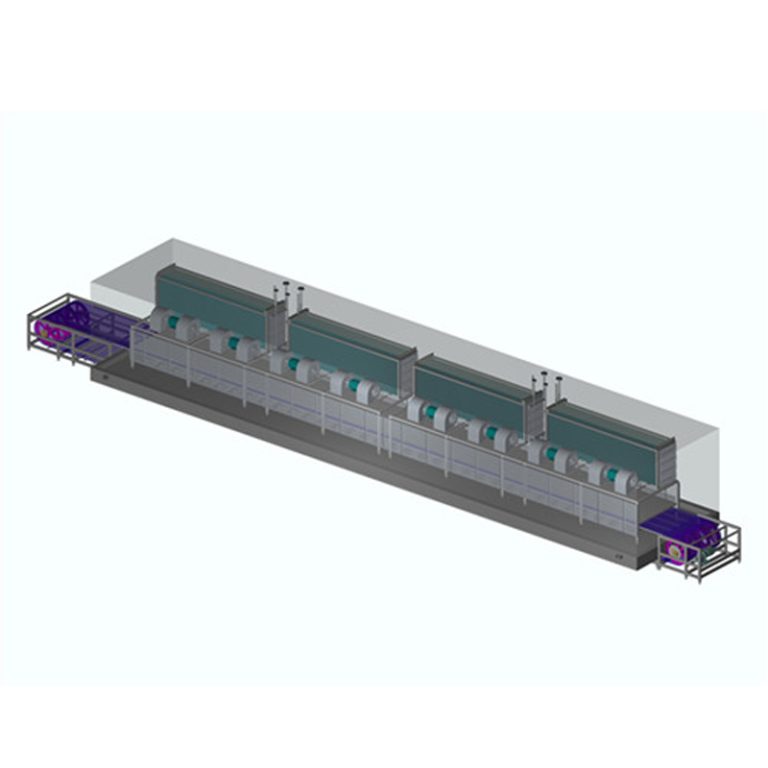
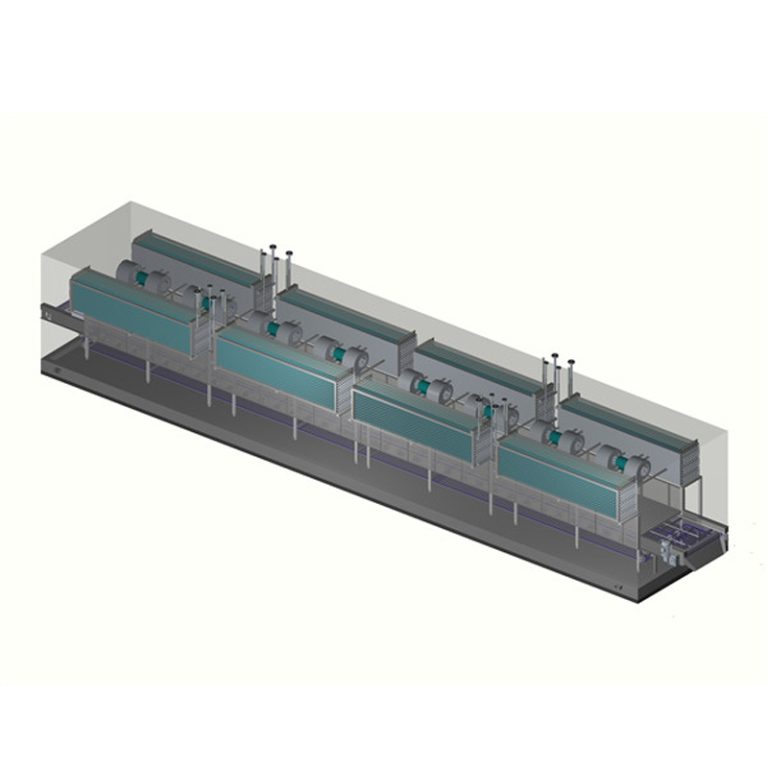
A low air temperature alone does not create IQF results. Pieces need exposure on several sides while their surfaces set. In fluidized bed freezing, upward cold airflow can lift suitable small pieces from a stainless steel mesh belt. The bed expands, open space increases, and low-temperature air surrounds individual particles. This is the physical reason a properly matched fluidized system can deal with IQF product clumping more directly than a conventional static belt section.
It also has a mechanical pulse vibration device beneath the mesh belt. Used with the airflow stage, it helps separate particles as they freeze. That combination is particularly relevant when small pieces are prone to sitting together at the infeed. It is not a substitute for sensible loading, but it gives the line a real separation action while the product is still movable.
The Set Phase Needs Stable Conditions
After the first separation zone, the product still needs a consistent freezing path. Sudden changes in feed rate, belt loading, or airflow can leave one part of the bed loose and another part partly fused. Operators should watch the first portion of the conveyor, not just the discharge. If pieces are already touching after that early section, the rest of the tunnel has less chance to produce clean, individually frozen products.
Match the Freezer to the Product, Not the Label
A small, free-flowing item and a large, soft, or irregular item do not behave the same way in cold air. This is where an IQF equipment portfolio should be assessed by product behavior rather than by a generic capacity target. Ask whether pieces can move independently, whether their surface can tolerate air movement, and whether the product keeps a reasonably consistent size through the shift.
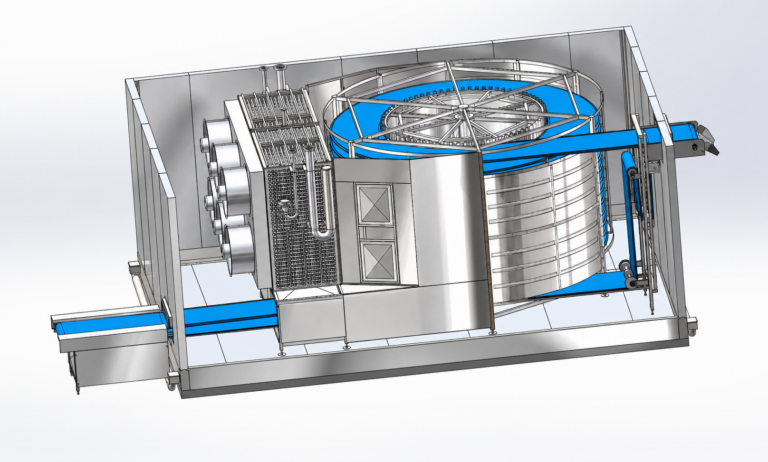
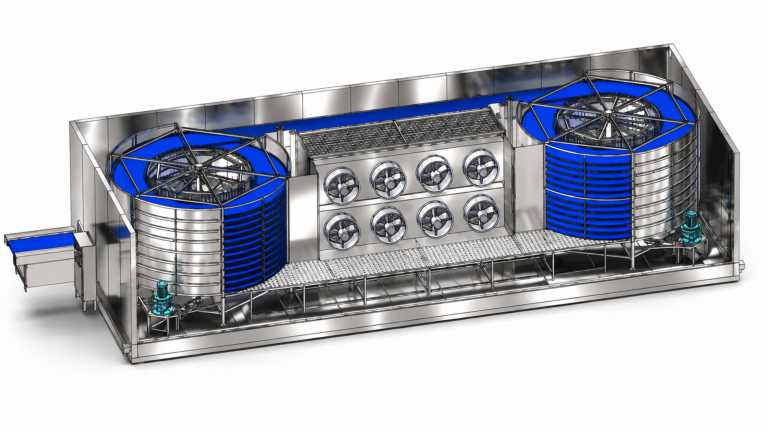
For particulate or semi-solid foods that can be fluidized, a fluidized bed tunnel freezer is a natural option to examine. YONGXING identifies fruit and vegetable pieces, seafood, ready-to-eat items, cheese cubes, breadcrumbs, and dough pieces among the relevant applications. The source material also describes the system as using high-velocity cold air to hold individual particles in a fluidized state, giving them exposure around the piece rather than freezing a settled layer from above.
Some products should not be pushed into a fluidized solution just because clumping is a concern. Large, delicate, coated, or shape-sensitive items may need controlled support from a belt rather than suspension. An impingement mesh belt freezer uses a SUS304 chain mesh belt and upper-and-lower air blowing. Its variable-frequency speed control is intended to adjust freezing time to the process, while mesh-belt width and length can be specified around output and site conditions. A trial with the actual product is the sensible way to decide whether that support still gives enough separation.
Run the Line So Separation Can Hold
Use a Short Infeed Check at Every–Changeover
A change in raw material, cut size, recipe, cooking temperature, or glaze can change how products behave on the belt. Before a full run, take a short sample and inspect how it lands, spreads, and moves through the first freezer section. The check need not become a long laboratory exercise. It should answer whether pieces are arriving singly, whether the layer is even, and whether the first surface set is happening before contact becomes permanent.
Keep Air Paths and Contact Surfaces Clean
Build-up on a belt, in an air path, or near an infeed transfer can change movement and reduce the consistency of airflow. For equipment expected to run wet food or frequent sanitation cycles, access matters. The fluidized tunnel information specifies food-contact 304 stainless steel and removable conveyor sections for cleaning; the mesh-belt model also uses food-contact stainless steel construction. Those details are useful procurement checks because cleaning access affects whether the intended product movement can be repeated from one production week to the next.
Questions That Reveal the Real Cause
A productive supplier discussion starts with the product, not a request for a universal setting. Send samples or clear details on size range, moisture condition, coating, feed rate, target pack format, and the point where clumps first appear. Ask to see how the suggested infeed, belt section, air distribution, and cleaning access relate to that product. It is also worth asking what adjustment is available when seasonality changes the moisture or firmness of fruit, seafood, or prepared food.
YONGXING builds IQF, fluidized tunnel, spiral, impingement, and food production line equipment for aquatic products, fruits and vegetables, meat, wheaten foods, and prepared foods. For a project with recurring frozen food sticking together, the useful next step is a product-specific discussion with YONGXING rather than copying another processor’s settings. The right configuration depends on the food, the infeed, and how much separation must occur before the product sets.
There is no single cure for IQF freezer problems. Still, most clumping investigations become clearer when the team follows the path in order: product surface, presentation on the belt, early separation, freezing stability, then sanitation and maintenance. That sequence keeps attention on the point where contact becomes a frozen bond. For more detail, see our guide on this article.
FAQ
Q1: Can a fluidized bed freezer handle every IQF product?
A1: No. Fluidized bed freezing is best assessed for small pieces that can move independently in airflow. Large, fragile, heavily coated, or irregular products may need a supported belt design and a product trial.
Q2: Why are products loose at discharge but clumped after packing?
A2: Check the transfer, dwell time, pack temperature, and any moisture introduced after the freezer. If individual pieces remain in contact while their surfaces are not fully set, frozen food sticking together can still occur downstream.
Q3: What information should a freezer supplier receive before recommending a solution?
A3: Provide the food type, piece dimensions, surface condition, coating or glaze, hourly feed pattern, available layout, cleaning routine, and the stage where IQF product clumping first appears. A representative product trial gives the recommendation a firmer basis.